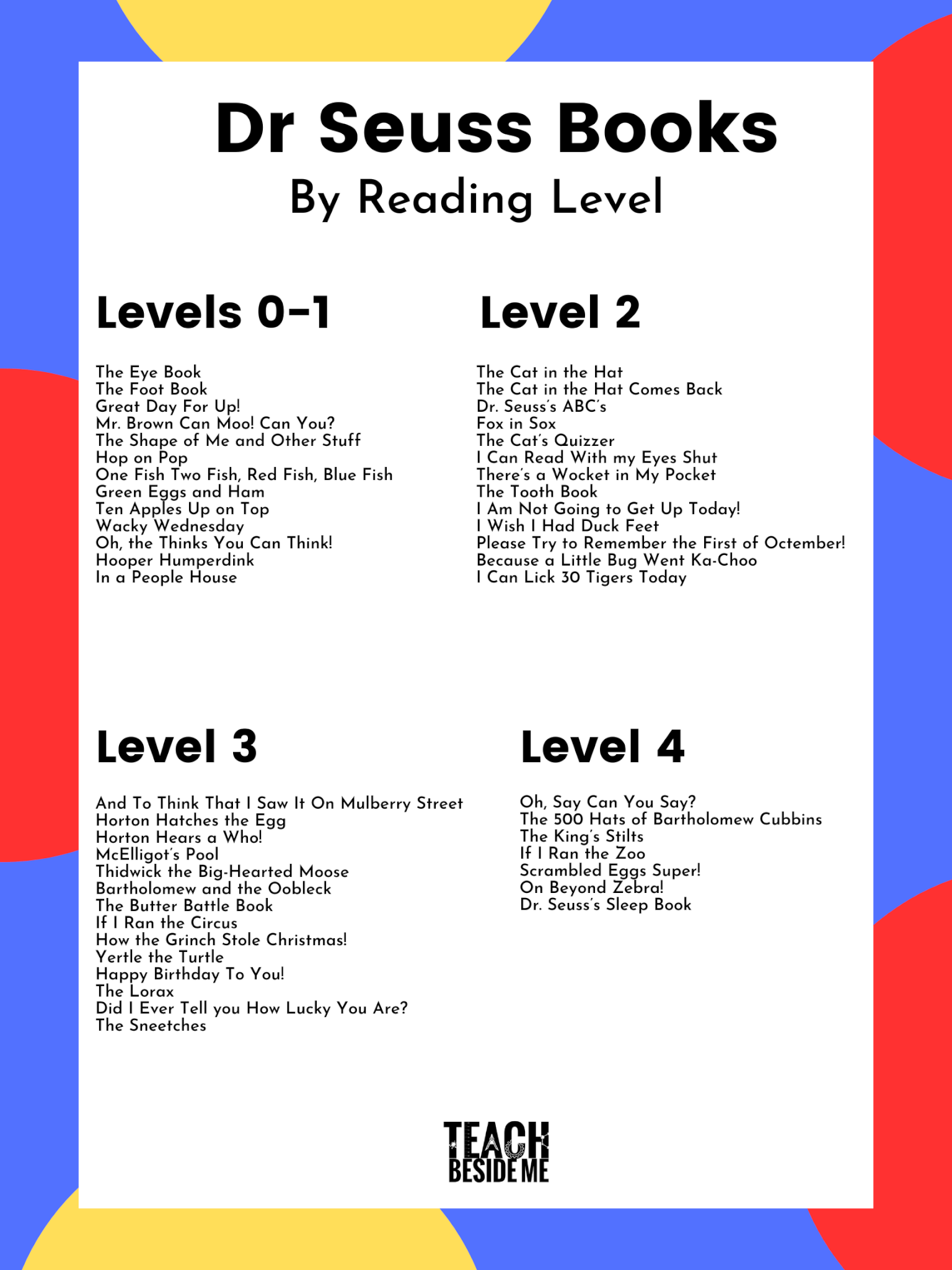
You probably think you know the Dr. Seuss library. You’ve got the striped hat, the green ham, and that weirdly prophetic Lorax guy. But if you try to count all of the Dr. Seuss books on your fingers, you’re going to run out of hands pretty fast. Honestly, even most superfans get the math wrong because the "Good Doctor" wasn't just one person—he was a whole collection of pen names and posthumous discoveries.
In fact, as of June 2026, the list just changed again.
Theodor Seuss Geisel—that's his real name—wrote and illustrated over 60 books. But here is the kicker: he also wrote about a dozen more under the name Theo LeSieg (which is just Geisel spelled backward) and one under the name Rosetta Stone. Toss in the "lost" manuscripts found in his San Diego home years after he passed away, and you're looking at a bibliography that is more of a labyrinth than a simple list.
The 2026 Surprise: Sing the 50 United States!
Just when we thought the archives were dry, Dr. Seuss Enterprises and Random House dropped a bombshell earlier this year. They found an original manuscript and cover sketches in the Geisel Library at UC San Diego. The result? A brand-new book called Sing the 50 United States!, which hit shelves in June 2026.
It’s a big deal.
It marks the first "new" Seuss material we’ve seen in years, following the 2019 release of Dr. Seuss’s Horse Museum. These posthumous releases aren't just cash grabs; they’re often reconstructed from his notes by other illustrators, but the DNA—the rhythm and the anarchic spirit—is pure Ted Geisel.
The Books That Went "Extinct" in 2021
We can’t talk about the full list without addressing the elephant in the room. Or rather, the books that aren't in the room anymore. Back in March 2021, the company managing his estate made a business decision that basically set the internet on fire. They stopped publishing six specific titles.
Why? Because they contained imagery that was "hurtful and wrong."
If you’re hunting for a complete physical collection, these are the six "ghost" titles you’ll have a hard time finding at your local Barnes & Noble:
- And to Think That I Saw It on Mulberry Street (his very first book!)
- If I Ran the Zoo
- McElligot’s Pool
- On Beyond Zebra!
- Scrambled Eggs Super!
- The Cat’s Quizzer
Collectors have seen the prices of these specific editions skyrocket on eBay. It's a weird twist of fate that his first published work is now one of the hardest to legally buy new.
More Than Just the Cat: The Pen Names You Missed
Ted Geisel was a bit of a perfectionist. If he wrote a story but didn't want to draw the pictures, he refused to use the "Dr. Seuss" brand. He felt that name was a promise to the reader that he did the whole thing.
So, he became Theo LeSieg.
Under this name, he wrote classics like Ten Apples Up On Top! and Wacky Wednesday. He also used the name Rosetta Stone for Because a Little Bug Went Ka-choo!. If you’re a purist trying to read every single thing he ever wrote, you have to track these down too. Most people don't realize they’re reading Seuss when they pick up The Tooth Book or In a People House, but the rhyme scheme is a dead giveaway.
The Heavy Stuff: Seuss for Adults?
People forget that Seuss started as a political cartoonist. He wasn't just about "Cat" and "Hat." Some of all of the Dr. Seuss books are actually pretty dark or deeply political.
Take The Butter Battle Book. It’s a terrifyingly accurate allegory for the Cold War and nuclear brinkmanship. It ends on a cliffhanger where two guys are standing on a wall about to drop a bomb that will end the world. Not exactly Goodnight Moon territory, right?
Then there’s You're Only Old Once!. He wrote this one in 1986, near the end of his life. It’s subtitled "A Book for Obsolete Children" and follows an elderly man through a gauntlet of medical tests and insurance forms. It’s hilarious, but it’s definitely not for toddlers.
The Core Classics: A Quick Refresh
Even with the rare finds and the controversies, the "Big Three" still dominate the landscape.
- The Cat in the Hat (1957): This was a literal revolution. His publisher bet him he couldn't write a book using only 225 "easy" words because the school primers of the time (think Dick and Jane) were boring kids to tears. He won the bet and changed education forever.
- Green Eggs and Ham (1960): Another bet! This time, his editor Bennett Cerf bet him $50 he couldn't write a book using only 50 different words. Ted won again.
- The Lorax (1971): This was his personal favorite. He wrote it in a burst of inspiration while on a trip to Kenya, watching the trees. It’s arguably the most influential environmental book ever written for children.
What to Look for if You’re Collecting
If you want to dive into the world of Seuss collecting in 2026, you need to know about the "Yellow Backs" and "Green Backs." These refer to specific UK editions and early printings that signify certain reading levels.
But for the real treasure hunters, the "Lost Stories" are where it's at. In 2011, a scholar named Charles D. Cohen compiled The Bippolo Seed and Other Lost Stories. These were pieces Seuss had published in magazines like Redbook in the 1950s but had never been put into book form. They are weird, wonderful, and offer a glimpse into the transitional period of his career.
How to Build Your Seuss Library Today
If you’re starting a collection for a kid (or yourself), don’t just buy the first "Best Of" collection you see. There's a strategy to it.
Start with the Bright and Early Board Books for the tiny humans. These are the indestructible ones. Then move to the Beginner Books—the ones with the "I Can Read It All By Myself" seal.
Finally, get into the Classic Seuss titles like Horton Hears a Who! or The Sneetches. These are the ones with the big philosophical questions about whether a person is a person no matter how small, or if having a star on your belly actually matters.
Actionable Next Steps
To truly experience the full scope of Dr. Seuss, do these three things:
- Check your local used bookstore for the "discontinued six." Many local shops still have copies from before 2021, and they are fascinating pieces of literary history.
- Look for the 2026 release, Sing the 50 United States!, to see how modern illustrators are interpreting his final notes.
- Read The Butter Battle Book as an adult. You’ll be shocked at how much more sense it makes now than it did when you were seven.
The world of Seuss is far bigger than a cat in a hat. It’s a massive, messy, wonderful map of the 20th century, and it’s still growing today.