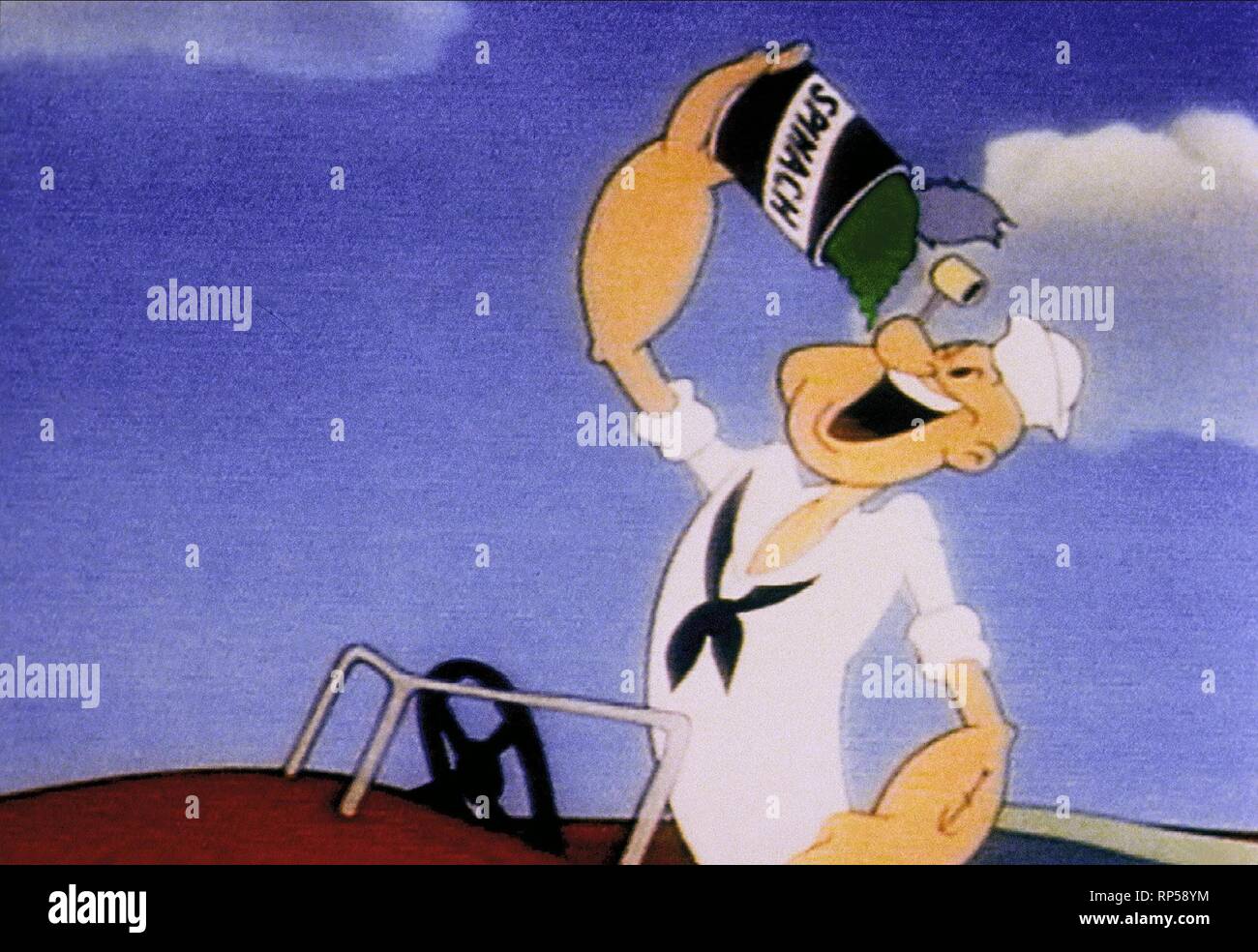
You’ve seen the shirts at Target. You’ve seen the vintage lunchboxes. But honestly, most people have no clue that Betty Boop and Popeye the Sailor actually shared the screen in one of the most important moments in animation history. It wasn't just a cameo. It was a calculated passing of the torch that basically saved Fleischer Studios from being steamrolled by Disney.
Back in July 1933, a short titled simply Popeye the Sailor hit theaters. If you look at the opening credits, it’s officially billed as a "Betty Boop Cartoon." But if you watch it expecting a Betty adventure, you’re gonna be confused. She’s barely in it.
The Fleischer brothers—Max and Dave—were the gritty, New York rivals to Walt Disney’s West Coast whimsy. While Walt was busy with talking mice and singing flowers, the Fleischers were obsessed with jazz, urban grime, and surrealism. By 1933, Betty was their undisputed queen. But they knew they needed something new. Something tougher. So, they took a popular comic strip character named Popeye and "tested" him in Betty’s world.
The Hula Dance That Launched a Legend
The plot is pretty standard for the time. Popeye, Olive Oyl, and the ever-menacing Bluto are at a carnival. About halfway through, they wander into a performance tent. Who’s on stage? It’s Betty Boop.
She’s wearing a grass skirt, doing a hula dance that—honestly—is pretty risque for a "kids' cartoon," even by 1930s standards. Popeye doesn't just watch; he jumps on stage, wraps a bearded lady’s beard around his waist to mimic a skirt, and starts dancing with her.
It’s a weird, fever-dream sequence.
- Betty does her signature "Boop-Oop-a-Doop."
- Popeye mumbles his way through a synchronized dance.
- The animation is fluid, thanks to the Fleischers' use of the Rotoscope.
This was the only time these two icons ever shared the frame in their original theatrical run. Think about that. One of the most famous crossovers in pop culture history lasted less than a minute. But that one minute changed the trajectory of the entire studio.
Why This Crossover Was Actually a Survival Tactic
You have to understand the context of the Great Depression. Animation was expensive. Disney was winning the war with Silly Symphonies and Mickey Mouse. The Fleischers had a hit with Betty, but the Hays Code was starting to tighten its grip.
The Hays Code was basically a set of industry moral guidelines that started being strictly enforced around 1934. It hated everything Betty stood for. Censors wanted her skirts longer, her neckline higher, and her "suggestive" jazz-age attitude scrubbed clean.
Max Fleischer saw the writing on the wall. He knew Betty’s days as a scandalous flapper were numbered. By introducing Popeye the Sailor in a Betty Boop short, he was using his biggest star to endorse his new project. It worked. Audiences went absolutely nuts for the mumbling sailor with the spinach addiction.
The Shifting Power Dynamic
By 1936, the unthinkable happened. Popeye actually surpassed Mickey Mouse in popularity polls. He was the biggest thing in the country. Meanwhile, Betty was being "domesticated" by censors, eventually becoming a boring middle-class homeowner who spent her time washing her dog, Pudgy.
It’s kinda sad when you think about it. The hula dance in 1933 was Betty at the height of her power, but she was unwittingly helping her replacement take the throne.
What Most People Get Wrong About the Voices
If you watch the 1933 short today, you might notice something sounds... off.
Usually, the legendary Mae Questel voiced both Betty and Olive Oyl. She’s the one who gave them those iconic, high-pitched squeaks. But in this specific crossover, Questel was out on maternity leave. Instead, both women were voiced by Bonnie Poe.
Poe did a solid job, but if you're a hardcore animation nerd, you can hear the difference. It’s a bit throatier, a bit less "elastic" than Questel's work. It’s one of those tiny details that makes this specific film a weird outlier in the Fleischer catalog.
Also, Popeye’s voice in this debut was provided by William "Billy" Costello. He gave Popeye that gravelly, rough-around-the-edges tone. Later on, Jack Mercer would take over and add the iconic "under-the-breath" mumbling that we all know today. But in 1933? He was just a tough guy who could punch a locomotive into scrap metal.
The Cultural Legacy of the "Sailor and the Flapper"
The reason this matters today isn't just about nostalgia. It’s about how franchises are built. The Fleischers pioneered the "backdoor pilot." They didn't just launch a Popeye series out of thin air; they embedded him into an established brand to guarantee success.
Today, we see this everywhere. Marvel does it with every movie. TV shows do it with spin-offs. But in 1933, it was a revolutionary way to handle intellectual property.
Actionable Insights for Fans and Collectors
If you're looking to dive deeper into this specific era, here is what you should actually do:
- Watch the Unrestored Versions: Search for the 1933 short Popeye the Sailor on archives like the Library of Congress or dedicated animation preservation sites. Avoid the redrawn colorized versions from the 80s; they look like a cheap coloring book and ruin the beautiful "ink and pen" detail of the original.
- Look for the "Public Domain" Trap: A lot of Betty Boop and Popeye shorts are in the public domain, which means there are thousands of terrible, blurry uploads on YouTube. Look for the Fleischer Studios Restoration Project releases. They’ve been cleaning up the original 35mm prints, and the difference is night and day.
- Check the Backgrounds: The Fleischers used a "Stereoptical Process" involving real 3D models and turntables for their backgrounds. In the 1933 short, pay attention to the depth of the carnival scenes. It looks more "real" than a lot of modern 2D animation because it technically was a 3D set.
The 1933 meeting of Betty Boop and Popeye remains a masterclass in character marketing. It was the moment the "East Coast" style of animation proved it could go toe-to-toe with Disney and win. Betty gave Popeye her stage, and he used it to become an American immortal.
To truly appreciate the history, start by tracking down the "Big Three" Popeye color specials: Sindbad the Sailor, Ali Baba, and Aladdin. They represent the peak of what the Fleischers learned after that first hula dance with Betty.