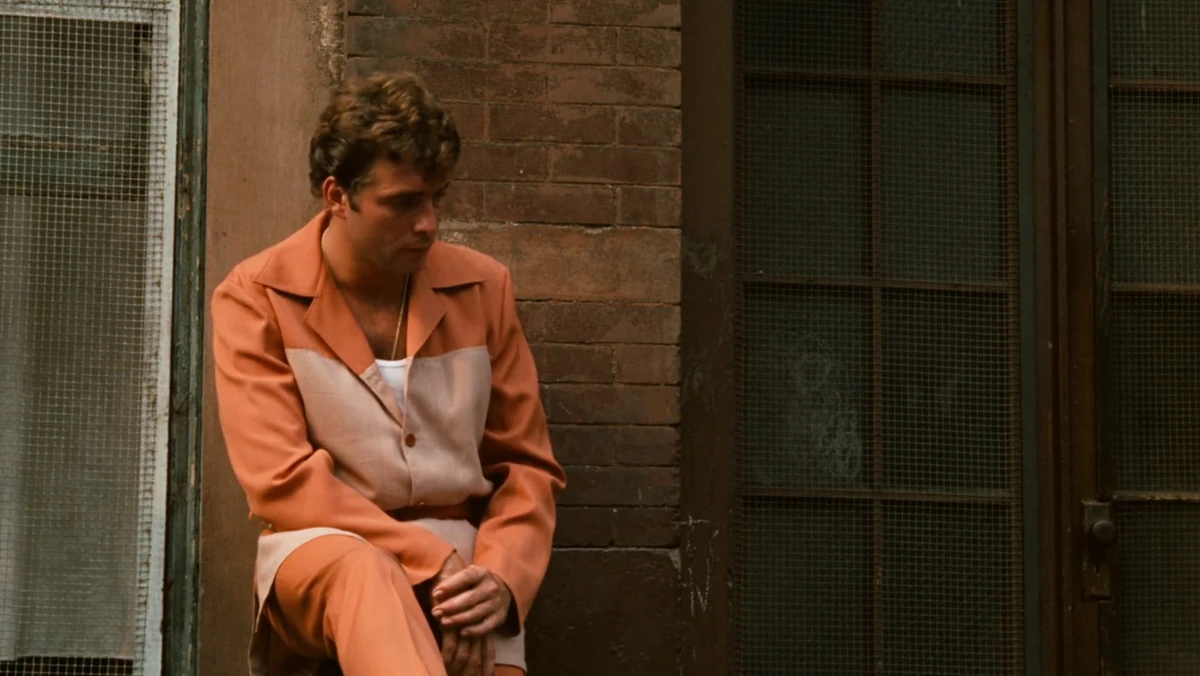
He was a punk. Honestly, there isn’t a better way to describe Carlo Rizzi from The Godfather. While fans usually spend their time debating whether Michael Corleone was a tragic hero or a cold-blooded monster, Carlo often gets shoved to the side as a mere plot device. He’s the guy who hit Connie. He’s the guy who set up Sonny. He’s the guy who ended up with a wire around his neck in the back of a car. But if you look closer at Mario Puzo’s original text and Francis Ford Coppola’s 1972 masterpiece, Carlo is the catalyst for the entire downfall—and eventual transformation—of the Corleone family. Without him, the story doesn't work.
Think about it.
The movie starts with his wedding. It’s a massive, sprawling celebration of Italian-American tradition, yet the groom is already an outsider. He’s a small-time hood from Nevada who married into royalty, and he knows he isn't respected. That resentment is what fuels every terrible decision he makes. He wasn't just some random abusive husband; he was the crack in the foundation of the Corleone empire.
How Carlo Rizzi Ruined Everything for the Corleones
The dynamic between Carlo and the Corleone brothers is fascinatingly toxic. Sonny Corleone, played with legendary hot-headedness by James Caan, absolutely despised him. And he had every reason to. Carlo wasn't just abusive to Connie; he was a liability. He was lazy. He expected a seat at the table without earning it. When Vito Corleone gave him a small, meaningless bookmaking operation to run, Carlo saw it as a slap in the face rather than a test of loyalty.
Most people forget that Carlo was actually a "living bridge" for the rival Barzini family. Don Emilio Barzini didn't just stumble upon a way to kill the untouchable Sonny Corleone. He looked for a weakness. He found it in the domestic tragedy happening inside the Rizzi household. By manipulating Carlo’s ego and his penchant for violence, Barzini turned a family member into a Trojan horse.
It’s brutal. It’s ugly.
The scene where Sonny beats Carlo in the street—using a trash can lid, no less—is one of the most famous "justice" moments in cinema. But it was also Sonny's death warrant. By publicly humiliating Carlo, Sonny ensured that Carlo’s loyalty to the Corleones was permanently severed. Carlo wasn't a "made man" in the traditional sense within that family; he was a punching bag. When the Barzinis approached him to set up the hit at the causeway, he didn't hesitate. He chose his own survival and a pathetic sense of revenge over the family that fed him.
The Reality of the "Set Up" at the Causeway
Let's get into the mechanics of the betrayal. This is where people often get confused about the timeline. Carlo didn't just "get lucky" with the timing of his fight with Connie. It was a calculated, choreographed move. He beat her specifically to trigger her call to the Corleone compound. He knew Sonny would come charging out, likely without a full security detail, because Sonny operated on pure emotion.
- The phone call was the trigger.
- The toll booth was the trap.
- The Tommy guns were the execution.
Gianni Russo, the actor who played Carlo, has talked extensively about how he landed the role despite having no acting experience. He famously had real-life ties to the underworld, which supposedly gave him an edge in portraying the greasy, insecure nature of a man like Rizzi. Russo has often claimed that his performance was fueled by a real-life tension with James Caan on set, which spilled over into that iconic street fight. Whether or not you believe Russo’s colorful stories about his past, his portrayal of Carlo captures a very specific type of mid-century cowardice that feels incredibly authentic.
Michael’s Long Game: The Baptism and the Betrayal
If Sonny was the hammer, Michael was the scalpel. This is where the character of Carlo Rizzi serves his most important narrative purpose. Michael Corleone’s decision to become godfather to Carlo and Connie’s child is the ultimate "keep your enemies closer" move.
Michael knew.
He knew from the moment he returned from Sicily that Carlo was involved in Sonny’s death. But Michael is a strategist. He waited. He waited years. He allowed Carlo to believe he was finally being integrated into the family business. He even let Carlo think they were moving to Nevada together to run the casinos. It was a masterclass in psychological warfare.
The juxtaposition of the baptism—where Michael renounces Satan and all his works—with the brutal "settling of all family business" is the peak of film history. While Michael is holding his nephew at the altar, his hitmen are wiping out the heads of the Five Families. And Carlo? Carlo thinks he’s safe. He thinks he’s been forgiven because he’s family.
He was wrong.
The final confrontation between Michael and Carlo in the empty mall is chilling. Michael is calm. He’s almost kind. He gives Carlo a way out—or so it seems. He tells him to confess, to admit Barzini approached him, and promises he won't be killed. "Only don't tell me you're innocent," Michael says, "because it insults my intelligence and it makes me very angry."
Carlo breaks. He admits it. He thinks the plane ticket to Las Vegas in Michael's hand is his ticket to a new life. But the moment he gets into that car and sees Peter Clemenza sitting behind him, the reality sets in. The look on Carlo's face as the garrote goes around his neck is the look of a man who realized too late that in the Corleone family, "blood" doesn't mean "safety."
Why Carlo Still Matters in Pop Culture
We see "Carlos" everywhere today. In modern prestige TV—think The Sopranos or Succession—there is always a Carlo. He is the character who thinks he’s more important than he is. He is the son-in-law or the fringe associate who feels entitled to the crown but lacks the discipline to wear it.
Basically, Carlo Rizzi is a warning.
He represents the danger of ego combined with insecurity. In the world of the Mafia, that’s a lethal combination. But even in the corporate world or social circles, the "Carlo" is the person who will burn the whole thing down because they felt slighted at a dinner party. He is the most human character in the film because his motivations—spite, greed, and fear—are so painfully common. Unlike Michael, who operates on a level of cold logic that most of us can't comprehend, Carlo is just a guy trying to get ahead and failing miserably at every turn.
Actionable Insights for Fans and Historians
If you’re looking to dive deeper into the lore of the Corleone family and the role of the Rizzi betrayal, there are a few things you should do to truly appreciate the craftsmanship of this character arc:
1. Read the book's "missing" scenes
Mario Puzo’s novel goes into much more detail about Carlo's upbringing and his initial meetings with the Barzini family. It paints a much more pathetic picture of him than the movie does. You’ll see that his resentment started almost the day he met Connie.
2. Watch the "Saga" cut
If you can find The Godfather Saga (the chronological edit made for TV), watch the scenes of Carlo and Connie’s early marriage. It adds layers to why the family—and specifically Michael—became so disillusioned with him so quickly.
3. Study the cinematography of the car scene
Look at the framing of the final scene where Carlo is killed. The way the camera stays outside the car while he kicks through the windshield is a deliberate choice to show that the family has officially moved on. He is literally being pushed out of the frame of the Corleone story.
4. Analyze the "Small Man" syndrome
Use Carlo as a case study in character writing. If you’re a writer or a fan of storytelling, notice how Coppola uses Carlo’s physical presence—always slightly over-dressed, always trying too hard—to signal his status. He wears the "uniform" of a mobster but lacks the soul of one.
Ultimately, Carlo Rizzi wasn't just a villain. He was the mirror that showed the Corleones who they really were. He forced Michael to become a murderer of his own kin, a move that would haunt the rest of the trilogy and eventually lead to Michael's own lonely end in a garden in Sicily. Carlo died in 1955, but his impact on the genre of crime drama is basically permanent.
Next time you watch the film, don't just wait for the toll booth scene. Watch Carlo in the background of the opening wedding. Watch how he looks at the people who actually have power. It’s all there in the eyes—the envy that eventually killed the biggest don in New York.