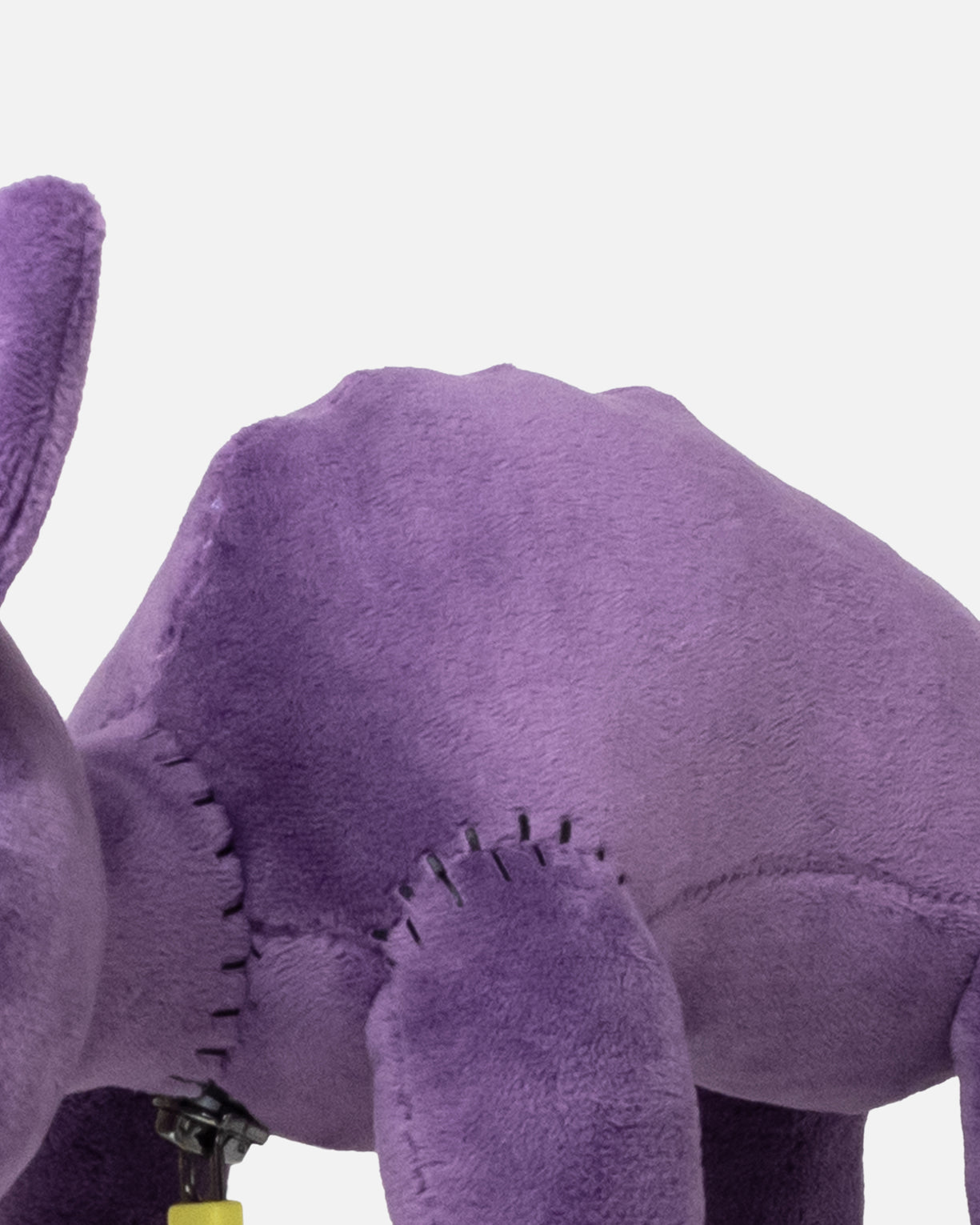
Mob Entertainment really outdid themselves with Chapter 3. If you've spent any time in the derelict ruins of Playcare, you know that CatNap isn't just another mascot gone wrong. He is terrifying. He is tall. He's basically a lanky, purring nightmare that breathes red smoke. But honestly, most of the lore breakdowns you see online miss the point about why this character actually matters to the broader Poppy Playtime universe.
He's a zealot.
It’s easy to look at the giant purple cat and see a simple slasher villain. That’s a mistake. Theodore Grambell—the orphan who became CatNap—is the most tragic figure in the series because his loyalty wasn't born out of malice, but out of a desperate need for a savior. When he was nearly killed by an elevator during an escape attempt at Playtime Co., the Prototype didn't just save his life. It claimed his soul.
The Red Smoke and the Science of Nightmares
The gas is the thing everyone remembers. In the game, it’s called the Red Smoke. It’s a hallucinogenic vapor that CatNap exhales from his mouth to incapacitate his prey. But from a lore perspective, it’s much darker. The smoke triggers vivid, horrific hallucinations, allowing CatNap to hunt children (and later, the player) while they are trapped in a waking dream.
Think about the environment of Playcare. It was supposed to be a sanctuary. Instead, it became a literal testing ground for the Poppy Playtime initiative. The "Home Sweet Home" sequence in Chapter 3 shows exactly how effective this gas is. You aren't just running from a physical monster; you're fighting your own brain as it melts under the influence of whatever chemicals the scientists stuffed into Theodore's body.
He was designed to be the "caretaker" of the orphans. He’d put them to sleep. But in the context of the "Hour of Joy," that sleep became permanent for anyone who stood in the way of the Prototype’s revolution.
Why Theodore Grambell Matters
Before he was a 10-foot-tall feline, CatNap was just a kid named Theodore. We find notes and VHS tapes—classic Mob Entertainment storytelling—that reveal he was an outcast even among the other orphans. He had a "imaginary friend." We know now that this friend was actually the Prototype (Experiment 1006).
Theodore tried to help the Prototype. He tried to open a door he shouldn't have. The resulting accident nearly ended him, but the Prototype "saved" him by calling for help, though "saved" is a strong word when you consider the kid was turned into a biological experiment with a digestive system that doesn't even function properly. This debt of gratitude turned into a full-blown religious obsession.
The Design of CatNap in Poppy Playtime
If you look at the Smiling Critters as a whole, they’re all bright, colorful, and friendly. DogDay, Bobby BearHug, CraftyCorn—they’re all standard toy fare. CatNap is different. Even in his "toy" form, there’s something off. His eyes are recessed. His smile is a bit too wide.
In his monster form, the transition is sickening. His skin looks like it was vacuum-sealed over a skeleton. He’s incredibly thin, which makes his erratic, twitching movements even more unsettling. He doesn't walk; he prowls.
The most disturbing part? His voice. Or lack thereof.
Unlike Mommy Long Legs, who wouldn't stop talking, or Huggy Wuggy, who was a silent predator, CatNap has this raspy, distorted way of communicating that feels like it's being pushed through a throat full of sand. It reinforces the idea that he isn't a toy anymore. He's a husk.
The Religious Zealotry of the Smiling Critters’ Leader
CatNap didn't just kill the other Smiling Critters. He "purified" them.
When you find DogDay in the jail cell, it’s one of the grimmest moments in Poppy Playtime history. DogDay, the leader of the group, explains that CatNap is the last of the Smiling Critters because he killed the rest for refusing to follow the Prototype. This isn't just a monster hunt. It's a holy war within the factory.
CatNap views the Prototype as a god. He built a literal shrine to him out of junk and old toys. It’s some of the most effective environmental storytelling in the horror genre because it shows that the monsters aren't just mindless eaters. They have a culture. They have beliefs. They have a hierarchy.
How to Survive the CatNap Boss Fight
Look, if you're struggling with the final encounter in Chapter 3, you're not alone. It's a chaotic mess of green-hand grappling and gas-dodging. Most people fail because they panic when the red smoke starts filling the room.
- Keep your eyes on the rafters. CatNap loves to crawl along the ceiling. If you lose sight of him, you're dead.
- The Green Hand is your best friend. You need to charge the electrical pillars quickly. Don't wait for him to appear to start moving.
- Listen for the hiss. Before he lunges or vents gas, there’s an audio cue.
The fight ends in a way that shocked everyone. After you electrocute him, the Prototype descends from the ceiling. CatNap doesn't fight back. He doesn't beg for help. He bows. He accepts his death as a final sacrifice to his "god." The Prototype then impales him through the mouth and drags him up.
It’s brutal. It’s efficient. It shows that for all of CatNap’s loyalty, he was just a tool to Experiment 1006.
What’s Next for the Lore?
Now that CatNap is gone, there’s a massive power vacuum in the lower levels of the factory. We know Poppy wants us to help her kill the Prototype. We know that the Prototype is currently building himself a body using the parts of fallen experiments like Mommy Long Legs and CatNap.
This means we haven't seen the last of him. Not really. We’ll likely see CatNap’s head or limbs integrated into the final form of Experiment 1006 in Chapter 4 or 5.
Actionable Insights for Players and Lore Hunters
If you want to get the most out of your next playthrough or if you're trying to piece together the timeline, keep these specific things in mind:
- Check the VHS Tapes again. Specifically, the one involving Theodore’s accident. It clarifies that the Prototype was manipulating him long before the "Hour of Joy" ever happened.
- Look at the Shrines. The statues CatNap built are made of specific mascot parts. It tells you exactly who he killed first.
- The Gas Masks. Notice how the gas masks in the game are modeled after the Smiling Critters' faces in some instances. The factory was prepared for CatNap's "sleep" long before the rebellion.
- Pay attention to the background noise. In the deeper levels of Playcare, you can hear CatNap’s breathing through the vents. He’s always there.
CatNap represents the peak of Poppy Playtime’s horror because he combines childhood nostalgia with the terrifying reality of cult-like devotion. He isn't just a monster under the bed; he’s the kid who stayed in the dark because he thought the dark loved him back.
To fully understand the tragedy, go back to the beginning of the Playcare level and look at the murals. They show a happy cat bringing sleep to children. By the end of the chapter, you realize that "sleep" was just a euphemism for the end of everything.
The best way to stay ahead of the next chapter is to archive the notes found in the Counselor's Office. They hold the key to how many more "Theodores" are still lurking in the depths of Playtime Co., waiting for their turn to serve the Prototype.