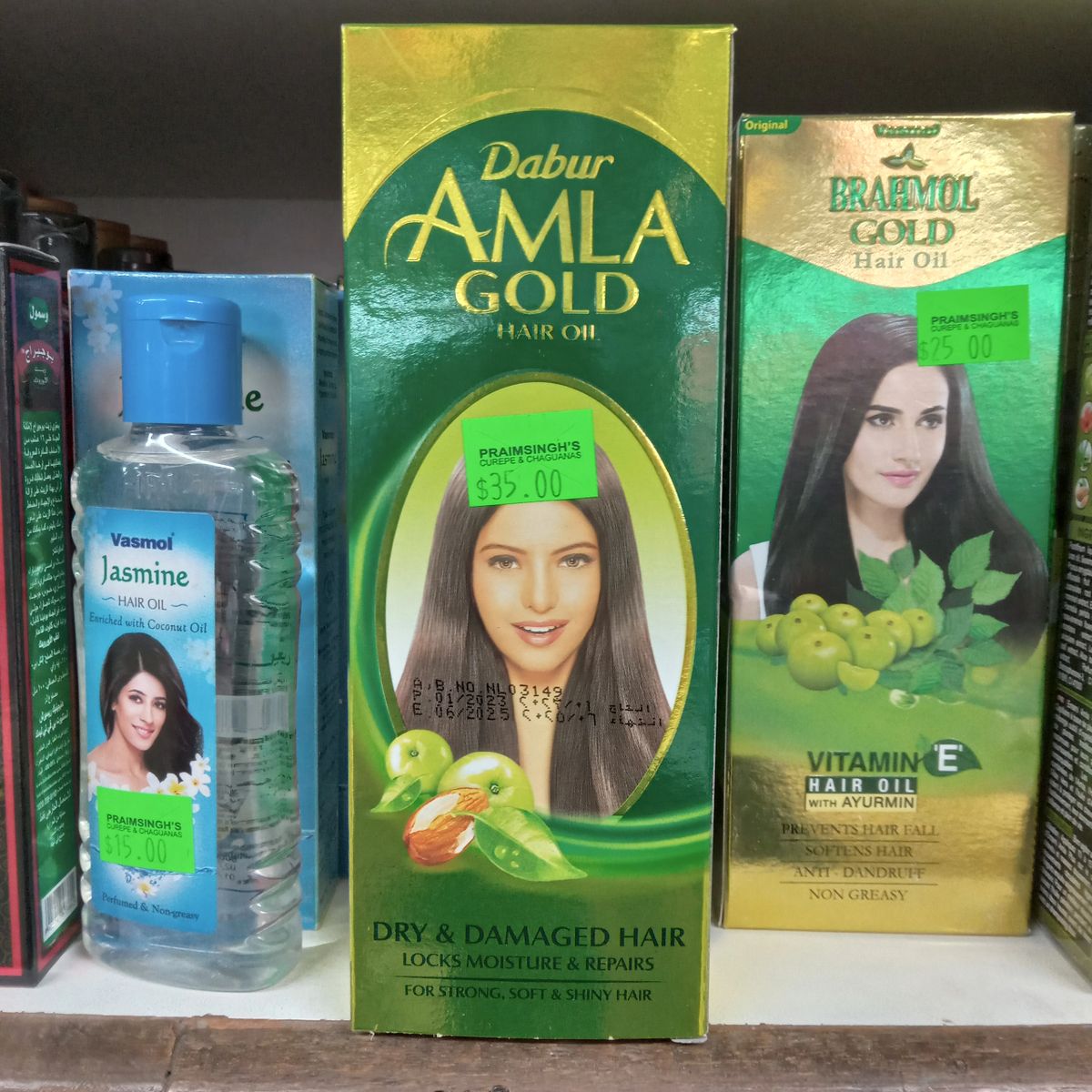
You’ve seen the green bottle. Maybe your grandmother kept it on her vanity, or you’ve caught that distinct, musky scent in the air at a local market. But here’s the thing—Dabur Amla Gold Hair Oil isn't just the same old liquid in a different wrapper. It's actually a specific pivot for people whose hair has been through the ringer.
If you’ve spent years bleaching, heat-styling, or just living in a city where the pollution feels like it’s coating your scalp in grime, the classic Amla oil might feel a bit... aggressive. It’s heavy. It smells like a punch to the face. The "Gold" version was basically formulated to be the softer, more sophisticated sibling that actually plays nice with damaged strands.
The Secret Sauce: It’s Not Just Gooseberries
Honestly, most people think "Amla oil" is just crushed Indian gooseberries in a base. While Amla is the star—packed with enough Vitamin C to make an orange jealous—the Gold variant brings two other heavy hitters to the party: Henna and Almonds. Think of it like a three-man team.
The Amla is there for the long game. It strengthens the roots and tries to stop your hair from falling out every time you brush it. Then you’ve got Almond oil, which is the "moisture guy." It’s much lighter than the traditional vegetable oils used in the original formula, making it easier to wash out without stripping your hair.
Then there’s the Henna.
Don't panic—it’s not going to turn your hair bright orange. In this concentration, Henna acts more like a protective sealant. It smooths down the hair cuticle. If you have "fried" ends from a bad dye job or too much flat-ironing, the Henna in Dabur Amla Gold Hair Oil sort of "glues" the surface back together so it reflects light. That's where that glassy shine comes from.
Why the "Gold" Version Actually Matters in 2026
We live in an era of chemical treatments. Whether it’s a Brazilian blowout, permanent straightening, or just constant coloring, our hair isn't "natural" anymore. Original Amla oil can sometimes be a bit too heavy for chemically treated hair—it can make it feel "gunked up."
Dabur realized this.
They made the Gold version specifically for dry, damaged, and chemically treated hair. It’s a lighter, more modern take. The fragrance is still there—that earthy, herbal vibe—but it’s toned down. It’s less "medicine cabinet" and more "spa day."
Let's Talk About the Ingredients (The Real Ones)
If you look at the back of the bottle, you’ll see Paraffinum Liquidum (mineral oil) and Canola Oil at the top. Some "clean beauty" purists might turn their noses up at mineral oil, but there’s a reason it’s used. It creates a massive barrier against moisture loss.
- Phyllanthus Emblica (Amla) Extract: The Vitamin C powerhouse.
- Lawsonia Inermis (Henna) Extract: The shine-maker and conditioner.
- Prunus Amygdalus Dulcis (Almond) Oil: The softener.
- Rosemary Leaf Oil: Often added to stimulate the scalp.
The Darkening Myth: Will It Turn My Hair Black?
This is a huge concern for blondes or anyone with light-treated hair. Since there is Henna and Amla in the mix, there is a slight chance of darkening over time. It’s not a hair dye, but it is a "toning" oil.
I’ve seen users with ash-brown hair say it helped cool down brassy, orange tones. But if you’re a platinum blonde? Yeah, maybe do a patch test on the underside of your hair first. You don't want to accidentally turn your $300 salon color into a swampy green-brown because the Henna decided to settle in.
How to Use It Without Looking Like a Grease Ball
Don't just pour it on and hope for the best. That’s how you end up with a ruined pillowcase and hair that looks like it hasn't been washed since 1994.
The Pre-Wash Ritual
The best way to use Dabur Amla Gold Hair Oil is as a pre-shampoo treatment. Warm the bottle up in a bowl of hot water for a few minutes. Not boiling—just warm. Massage it into your scalp using your fingertips (not your nails!). Work it down to the ends, which are usually the thirstiest part of your hair.
Leave it for at least 30 minutes. If you’re brave and have a towel over your pillow, leave it overnight.
The Finishing Touch
If you have extremely thick or curly hair, you can use a tiny—and I mean tiny—drop on your ends after styling. It kills frizz instantly. But be careful. One drop too many and you're back to square one.
The Reality Check: What It Won't Do
Let’s be real for a second. No oil is going to magically make your hair grow three inches overnight.
Hair growth is mostly internal—genetics, diet, stress levels. What this oil does is retention. By strengthening the hair and preventing breakage at the ends, your hair actually gets longer because it isn't snapping off at the bottom. It's about maintenance, not a miracle.
Also, it won't "cure" male pattern baldness. If the follicle is gone, it’s gone. But if your scalp is dry, flaky, and your hair is thinning because it’s brittle? That’s where this stuff shines.
Actionable Next Steps for Better Hair
If you're ready to try it, don't just dive in. Follow these steps to get the most out of the bottle:
- Check the Label: Make sure you're buying the "Gold" version if your hair is dry or dyed. The original green bottle is better for "virgin" or oily hair.
- The Scalp Test: Apply a small amount behind your ear first. Some people are sensitive to the botanical extracts or the fragrance.
- Consistency is Key: Use it twice a week for a month. You won't see the "Gold" effect after one wash. It takes about four weeks for the Henna and Amla to really start conditioning the hair shaft properly.
- Double Shampoo: When you wash it out, shampoo twice. The first wash breaks down the oil; the second wash actually cleans the hair.
- Avoid Heat Post-Oiling: Don't oil your hair and then immediately use a 450°F flat iron. You're basically "frying" the oil into your hair. Oil, wash, then style.
By shifting your routine to include a targeted treatment like this, you're moving away from just "cleaning" your hair and toward actually "repairing" it. It's an old-school remedy that has survived this long for a reason.