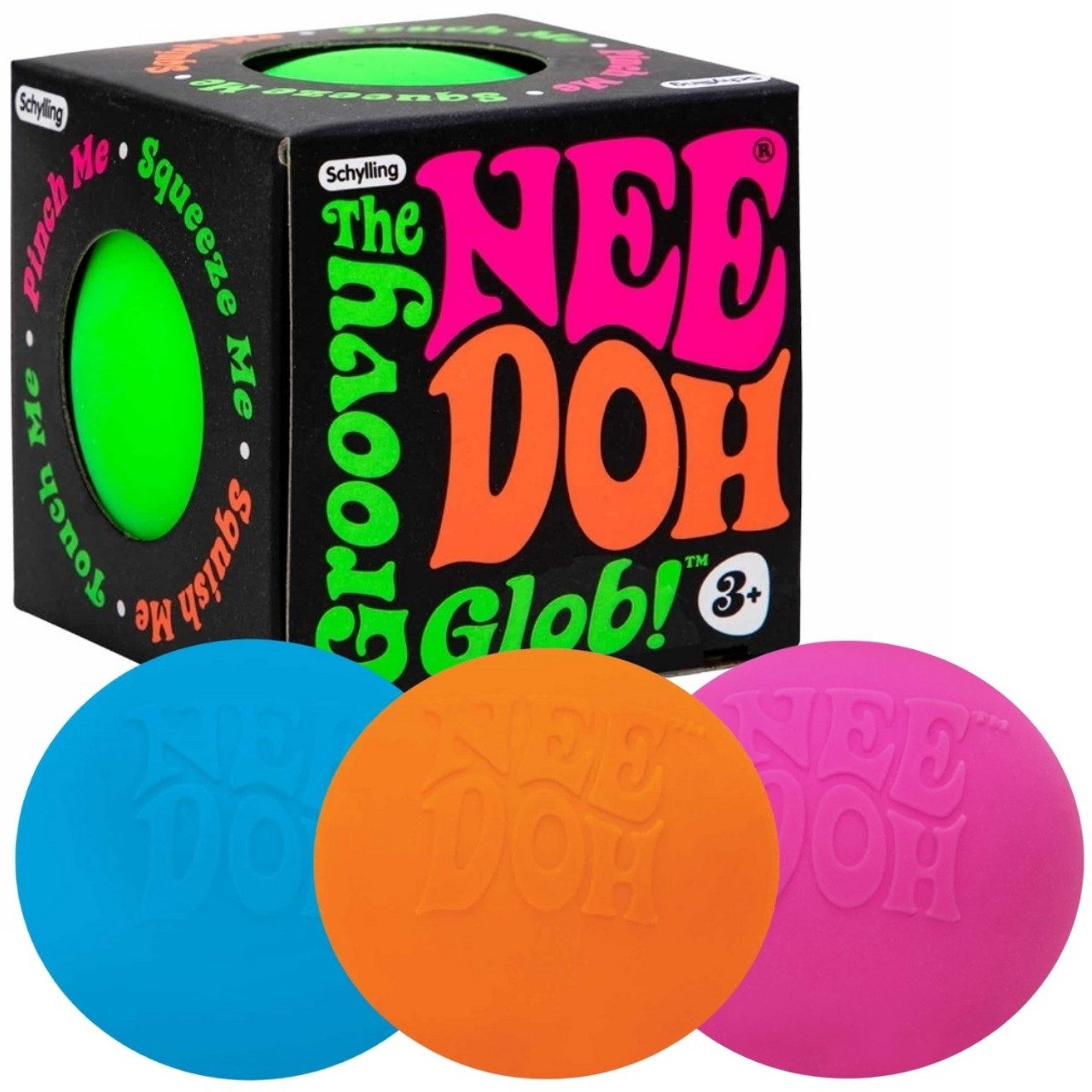
You’ve seen them everywhere. Those squishy, bright, strangely satisfying balls sitting on every desk and filling up every toy bin in America. Schylling’s NeeDoh has basically become the gold standard for fidget toys. But if you’ve ever had one burst in your hand—or worse, caught your toddler trying to take a bite out of a Teenie NeeDoh—you’ve probably had that instant panic. Is NeeDoh toxic? It’s a fair question. We live in an era where we’re constantly hearing about microplastics, phthalates, and "forever chemicals" in our household goods.
Honestly, the short answer is no, but it’s not quite that simple.
There’s a big difference between "non-toxic" and "edible." There is also a massive difference between the official Schylling brand products and the cheap knock-offs you find in the dollar bin or on questionable third-party marketplaces. If you're holding a genuine NeeDoh, you're looking at a product made from a specialized synthetic material called Thermoplastic Elastomer (TPE). It's not the same stuff as the old-school PVC toys that used to smell like a chemical factory.
What is Actually Inside a NeeDoh?
Most people think there’s some kind of mystery goo inside. It’s actually a "dough-like" compound. Schylling is pretty protective of their exact formula—trade secrets and all that—but they are very clear about what isn't in there. They’ve gone on record stating their products are free of BPA, phthalates, and latex. That’s a huge relief for parents of kids with skin sensitivities or allergies.
The outer skin is TPE. This material is widely used in everything from toothbrush handles to medical tubing because it’s durable and generally hypoallergenic. Inside, the "classic" NeeDoh contains a non-toxic, flour-based powder or a thick, gel-like substance depending on the specific model (like the Super NeeDoh vs. the Crystal version).
If your dog eats one? You're probably looking at a messy carpet and a very confused vet visit, but it shouldn't be a poison control emergency. However, "non-toxic" doesn't mean "digestible." If a child swallows a large chunk of the outer casing, the risk isn't chemical poisoning—it's a physical bowel obstruction.
The Real Danger: Choking and "Fakes"
Safety isn't just about chemicals. It's about physics.
The biggest risk with NeeDoh isn't toxicity; it's the fact that these things are designed to be squeezed, pulled, and stressed. Eventually, they pop. I’ve seen it happen. One minute you’re decompressing from a Zoom call, the next you have white goop all over your keyboard.
For kids under three, this is a major choking hazard. The Consumer Product Safety Commission (CPSC) has strict guidelines on small parts, and while NeeDoh passes these tests for older kids, once the "skin" breaks, you have a collection of small, swallowable parts.
Then there’s the issue of the "dupes."
You can go on certain massive discount sites and find "squishy flour balls" for ten cents. Avoid these. These manufacturers often skip the rigorous ASTM F963 testing that Schylling goes through. These off-brand versions are much more likely to contain lead in the pigments or cheap phthalates used to make the plastic soft. If you’re asking is NeeDoh toxic because you bought a pack of ten unbranded balls from a random warehouse, the answer might actually be yes.
Testing and Certifications: The Boring (but Important) Stuff
Schylling doesn't just pinky-promise that their stuff is safe. They have to comply with international toy safety standards. This includes:
- ASTM F963: The standard consumer safety specification for toy safety in the US.
- EN71: The European equivalent, which is often even stricter regarding chemical migration.
- CPSIA: The Consumer Product Safety Improvement Act, which regulates lead and phthalates.
When a company says they are "non-toxic," it means they have passed "acute toxicity" tests. It means that if the substance touches your skin or a tiny bit is accidentally ingested, it won't cause immediate harm. It doesn't mean you should make a sandwich out of it.
The "Smell" Test
Have you ever opened a fresh NeeDoh and noticed a weird, sweet, or rubbery scent? People often mistake this for "toxic fumes."
Actually, that's just "off-gassing." TPE and the lubricants used in the molding process can have a distinct odor when they are first pulled out of the airtight packaging. It’s similar to that "new car smell." Usually, if you let the toy sit out in a well-ventilated room for 24 hours, the smell disappears. If the smell persists and gives you a headache, that’s a red flag—but again, that’s much more common with counterfeit brands than the real deal.
What to Do If a NeeDoh Breaks
Don't panic. Seriously.
If the inner material gets on your skin, just wash it off with warm soap and water. If it gets in your hair? Peanut butter or olive oil—the same way you’d get out bubblegum.
If your child eats a small amount of the filling, give them some water and keep an eye on them. The filling in the standard NeeDoh is essentially a thickened, treated flour or a starch-based paste. It tastes gross, which is actually a safety feature in itself. Kids aren't likely to go back for a second bite.
However, if they swallow a large piece of the rubbery outer shell, call your pediatrician. The shell is the part that won't break down in the stomach.
How to Stay Safe with Squishies
- Check the Brand: Look for the Schylling logo on the packaging. If it’s just a clear plastic bag with no branding, toss it.
- The Age Rule: Stick to the 3+ age rating. Even if your toddler is "advanced," their tendency to put things in their mouths isn't worth the risk.
- Inspect Regularly: Every few days, give your NeeDoh a good stretch. Look for "stretch marks" or thinning in the TPE. If the skin looks cloudy or compromised, it’s time for the trash.
- Clean Properly: If it gets sticky (they love to pick up lint), just rinse it with cool water and a tiny bit of dish soap. Pat it dry and maybe hit it with a dusting of cornstarch to get that original "soft" feel back.
Actionable Steps for Concerned Parents
If you are still feeling uneasy about whether NeeDoh is toxic, there are a few concrete things you can do right now.
First, check your current stash. Anything that smells like gasoline or has a greasy residue that won't wash off should be discarded immediately. That greasy feeling is often a sign of "plasticizer migration," which is common in low-quality plastics.
Second, if you want a 100% "clean" fidget, look into silicone-based toys. Pure food-grade silicone is generally considered the safest "soft" material on the market, though it doesn't quite have that unique "doughy" resistance that NeeDoh is famous for.
Third, keep the packaging. If there is ever a recall, you’ll need the batch code or the UPC to see if your specific toy is affected. Schylling has a solid track record, but in the world of global manufacturing, being prepared is just smart parenting.
NeeDoh is a safe, fun, and highly effective tool for sensory processing and stress relief. As long as you are buying authentic products and using them as intended, the toxicity risk is practically zero. Just keep them away from the family dog and the teething baby, and you’ll be fine.