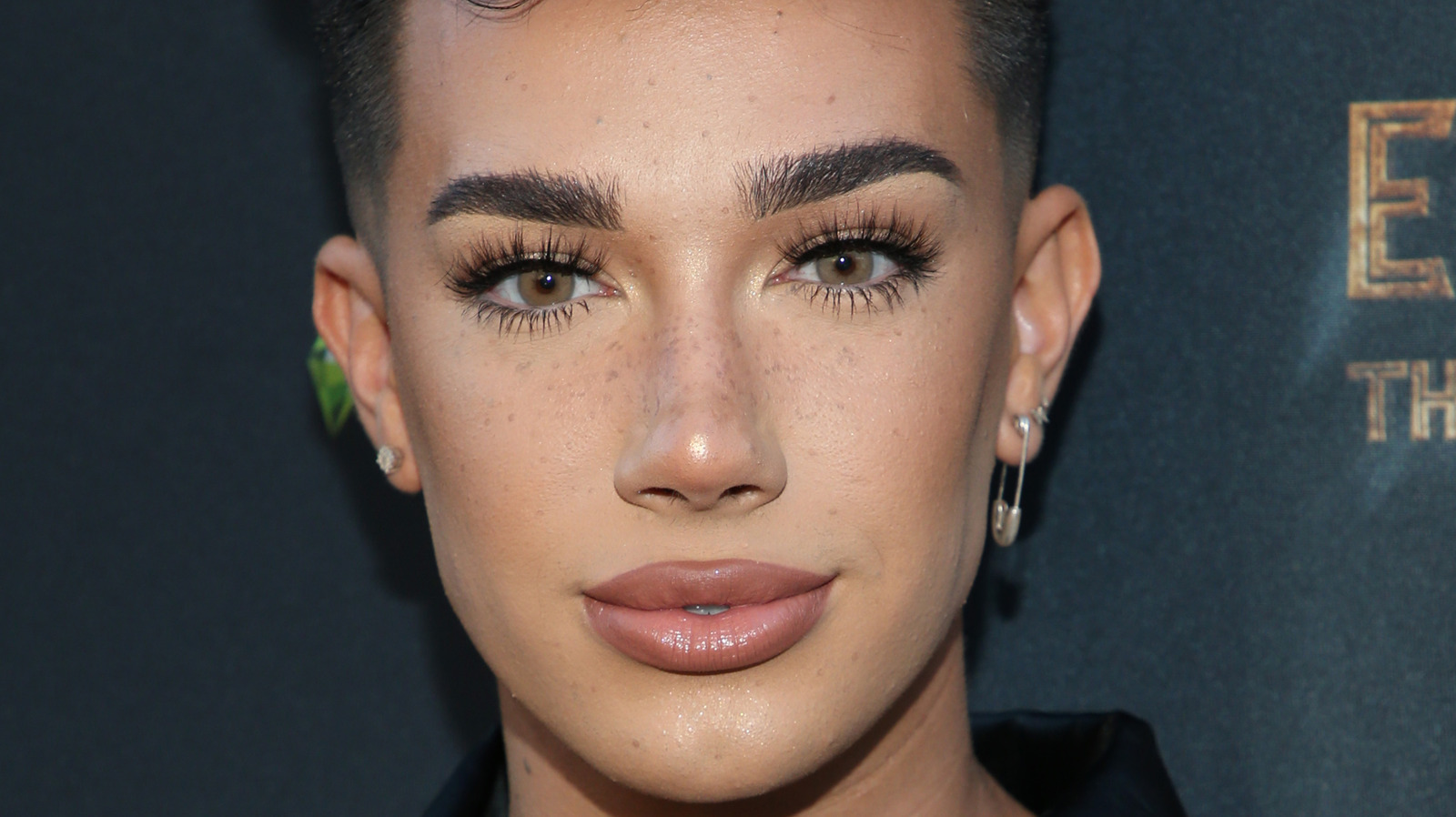
It’s the photo that launched a thousand memes. You know the one. James Charles, eyes bright, smile wide, and a face so aggressively white it looks like he’s wearing a ceramic mask or perhaps auditioning for a role as a Victorian ghost.
Honestly, the James Charles white face moment—affectionately and brutally dubbed "Flashback Mary"—is basically a piece of internet history at this point. It's one of those rare viral glitches that managed to transcend the beauty community and land squarely in the "cursed images" hall of fame. But if you think it was just a case of a makeup artist forgetting how to match foundation, you're only getting half the story.
The Night Flashback Mary Was Born
Back in early 2017, James Charles was at the height of his initial "CoverBoy" fame. He was attending an event, meeting fans, and doing the usual influencer rounds. Everything seemed fine in person. Then, the photos hit Twitter.
A fan posted a picture taken with a heavy camera flash. In the shot, James's face isn't just pale—it's glowing with the intensity of a thousand suns. It looks like he dipped his head in flour. Because the internet is, well, the internet, the image was immediately snatched up. People didn't just share it; they edited it to make it even more stark, turning James into a literal urban legend.
It wasn't just a foundation fail
Most people assume he just picked the wrong shade at Sephora. Nope. That’s a common misconception. In reality, the culprit was a phenomenon known in the industry as makeup flashback.
Flashback happens when certain light-reflecting ingredients in your products—specifically silica, mica, or physical sunscreens like zinc oxide and titanium dioxide—react to the high-intensity burst of a camera flash. They do exactly what they’re designed to do: reflect light. But when you’re in a dark room and a professional-grade flash hits a face packed with high-definition setting powder, that light bounces right back into the lens.
The result? A ghostly white cast that doesn't exist in real life.
The Science of the "Cursed" Glow
Why did it look that bad? It's all about the ingredients. James was known for using Coty Airspun Loose Face Powder and various HD finishing powders at the time. These products are staples for "baking" your makeup to get that poreless, airbrushed look on video.
- Silica: This is the main ingredient in "HD" powders. It’s amazing for blurring skin on film, but it’s a nightmare for flash photography.
- SPF Ingredients: Titanium Dioxide is a physical blocker. It’s basically a mirror for UV rays. When a flash hits it, it treats that light like the sun and reflects it.
- The "Baking" Technique: James was a heavy baker. By piling on layers of translucent powder and letting it sit, he was essentially creating a reflective shield on his skin.
What's kinda wild is that in person, he probably looked flawless. In natural light, these powders are invisible. But cameras don't see the way humans do.
James Charles's Genius Response
Most influencers would have deleted their accounts or gone into hiding. Honestly, the hate was pretty intense. People were calling him an "untalented makeup artist" and questioning his CoverGirl status.
James did the opposite.
He leaned into the joke so hard it actually helped his brand. He officially named the persona Flashback Mary. He even filmed a "tutorial" where he intentionally recreated the look, piling on white face paint and setting powder until he looked like a character from It.
"You guys have no idea how fun it is to wake up in the morning and wanting to cry yourself right back to sleep," he joked in his April 2017 response video. By making fun of himself before everyone else could, he took the power away from the trolls. He even changed his Twitter handle to Flashback Mary for a while. It was a masterclass in PR recovery.
The 2026 Perspective: Why It Still Matters
Fast forward to today, and we still see "Flashback Mary" references every time a celebrity has a red carpet mishap. It's become the industry standard for what not to do.
But there’s a deeper lesson here about the "Instagram Face" era. We were all obsessed with looking perfect behind a Ring Light, forgetting that the real world (and professional cameras) work differently. James wasn't the only one; celebrities like Nicole Kidman and Angelina Jolie have had similar white-powder mishaps on red carpets. James just happened to be the one the internet decided to turn into a meme.
How to Avoid Your Own James Charles White Face Moment
If you’re worried about looking like a ghost in your next night-out photo, you don't need to throw away your makeup bag. You just need to be strategic.
- Check for Silica: If your powder says "HD" or lists silica as a top ingredient, keep it for daytime or video work. Avoid it if you know there will be flash.
- Skip the SPF at Night: You don't need SPF 50 at a 10 PM party. Most foundations with built-in sunscreen will cause at least a little bit of a white cast.
- The Flash Test: This is the most important step. Before you leave the house, take a selfie in a dark room with the flash on. If you look like a Victorian orphan, you’ve got time to fix it with a bit of bronzer or a colored setting powder.
- Switch to Tinted Powders: Instead of "translucent" white powders, try something with a yellow or peach tint. They absorb light better than white formulas.
The reality of the James Charles white face saga is that it was a perfect storm of heavy-handed technique, specific product chemistry, and a bit of malicious Photoshopping by the internet. It didn't ruin his career—in some ways, it humanized him to a massive audience. It showed that even the "pros" can get hit by the physics of light.
Next time you’re getting ready for a big event, remember that "translucent" doesn't always mean invisible. Sometimes, it means "reflective beacon." Don't let your setting powder be the loudest thing in the room.
Actionable Insights for Your Next Look:
Scan your current setting powder for "Silica" or "Methicone." If you find them, reserve that powder for matte, everyday wear. For events, invest in a powder specifically labeled "flashback-free," like those from Laura Mercier or Patrick Ta, which are formulated without the high-refractive index minerals that caused the Flashback Mary disaster.