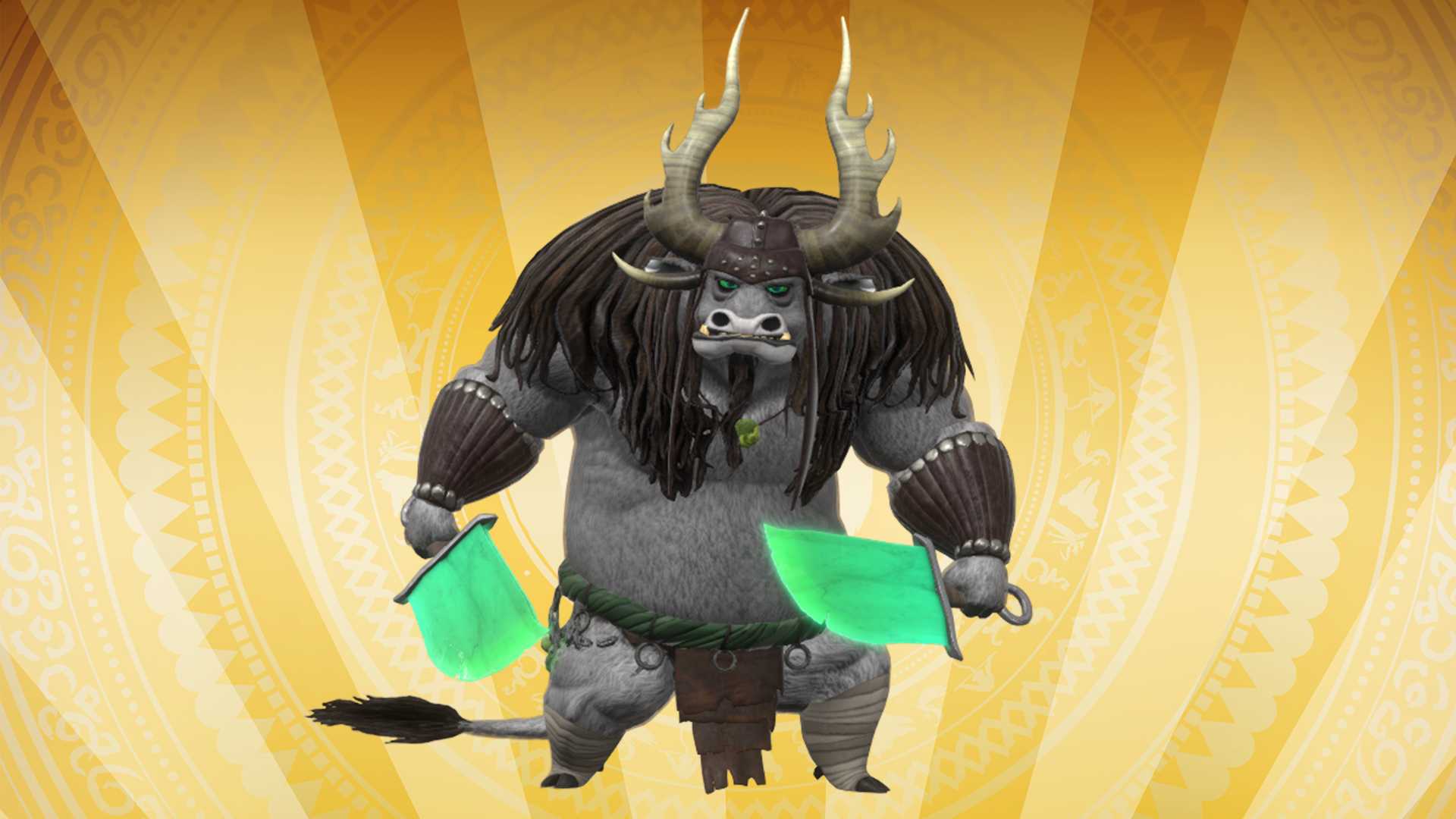
Let’s be real for a second. If you grew up watching the adventures of a noodle-slurping panda, you probably have a favorite bad guy. For most, it’s the raw, daddy-issue-fueled rage of Tai Lung or the Shakespearean, genocidal elegance of Lord Shen. Then there’s Kai Kung Fu Panda 3. He’s the guy who rolls into the mortal realm with arguably the hardest theme music in DreamWorks history—a heavy, distorted riff that screams "final boss"—only to be met with a chorus of "Who?"
That gag defines Kai. He’s a legendary warrior from a forgotten era, a "Beast of Vengeance" whose legacy was literally wiped from the history books. Honestly, it’s kind of tragic if you think about it. You spend 500 years in the Spirit Realm becoming a god-tier chi-stealer, and the first guy you meet in the Valley of Peace thinks you’re a tax collector.
The General, The Traitor, and The Jade Slayer
Kai wasn't always a supernatural bull with glowing green eyes. Five centuries before the events of the movie, he was Oogway’s brother-in-arms. They were like the ultimate power duo leading an army across ancient China. When Oogway was wounded in an ambush, the pandas of a secret village healed him using the power of chi.
That’s where things went sideways.
Oogway saw the light and learned to give chi; Kai saw a shortcut to godhood and learned to take it. He basically pioneered a "vampire" style of kung fu. This led to a massive showdown that "shook the earth," ending with Oogway banishing his best friend to the Spirit Realm. Kai didn't just sit around and mope for 500 years. He spent that time hunting every single kung fu master who ended up in the afterlife, turning them into little jade charms.
Why the "Jade Zombies" actually matter
People often dismiss Kai’s "Jombies" (Jade Zombies) as a convenient way to give the Furious Five something to punch, but they represent his psychological warfare. By turning masters like Crane and Mantis into mindless jade puppets, he’s not just defeating them—he’s erasing their agency. He sees through their eyes. He fights through their bodies. It’s a level of violation we hadn't seen in the previous films.
When Kai finally makes it back to the mortal world, he isn’t looking for a scroll or a throne. He wants to finish the job. He wants every ounce of chi Oogway left behind, which leads him straight to a certain chubby panda who just learned he has a biological dad.
What makes Kai different from Tai Lung and Shen?
There is a lot of chatter online about whether Kai is a "weaker" villain than the ones who came before. If you look at the raw numbers, Kai is actually the most powerful. Tai Lung was a brawler; Shen was a strategist with gunpowder. Kai? Kai is a force of nature. He’s the first supernatural villain in the franchise, voiced with a perfect mix of gravel and insecurity by J.K. Simmons.
Simmons brings this weirdly relatable "get off my lawn" energy to a guy who can level a palace with a flick of his jade blades. Kai is insecure. He’s obsessed with his reputation. Every time someone asks "Kai who?", it stings because his entire motivation is built on being remembered.
- Tai Lung was about the betrayal of a father figure.
- Lord Shen was about the trauma of a prophecy and a lost legacy.
- Kai is about the corruption of a friendship and the fear of being forgotten.
The stakes are also way higher. In the first two movies, the Valley of Peace was in danger. In Kung Fu Panda 3, the entire concept of Kung Fu is at risk. If Kai wins, the art dies with him.
The Myth Behind the Bull
While DreamWorks mostly does its own thing, Kai has some deep roots in Chinese mythology. Fans have often pointed out his resemblance to Aoyin, a mythical bull-like creature from the Classic of Mountains and Rivers. Aoyin is described as a man-eating monster with long hair and four horns that was eventually defeated by an immortal.
The designers originally toyed with giving Kai four arms to lean into that "yak god" aesthetic, but they eventually scaled it back to the dual-wielding chain blades we see in the final cut. Those blades—the "Blades of Chaos" style weapons—give him a reach that makes him almost impossible to fight in close quarters.
Why Po couldn't just use the Wuxi Finger Hold
Remember the "skadoosh"? In the first movie, that move was the ultimate "I win" button. It sends mortals straight to the Spirit Realm. When Po tries it on Kai, it fails spectacularly.
"I'm a Spirit Warrior," Kai laughs. "Where are you gonna send me? Back home?"
This is a massive turning point for Po. It’s the first time he realizes that being a "warrior" isn't enough. To beat Kai, Po has to stop being a brawler and start being a teacher. He has to embrace the very thing Kai rejected 500 years ago: the ability to give chi instead of taking it.
The final battle in the Spirit Realm is basically a "too much of a good thing" scenario. Po doesn't beat Kai with a punch; he beats him by giving him exactly what he wanted. He floods Kai with so much chi from the pandas and his friends that the villain literally overloads and explodes into golden light.
Is Kai actually "Underrated"?
Honestly, yeah.
The movie shifts tones from high-stakes action to panda-village slapstick pretty fast, which sometimes undercuts Kai’s menace. But look at what he actually achieved. He defeated Master Oogway (even if Oogway let it happen). He destroyed the Jade Palace. He turned the most legendary warriors in China into jewelry.
If you're looking for a villain who represents the "shadow" of Oogway—the path not taken—Kai is it. He is the personification of greed and the refusal to change. While Oogway spent centuries evolving, Kai spent them stewing in his own bitterness.
Understanding the Kai Legacy
If you're revisiting the franchise or introducing someone to it, don't sleep on the third installment. Kai might not have the tragic "orphan" backstory of the others, but his role as the "Collector" adds a layer of cosmic horror to the world of Kung Fu Panda that wasn't there before.
Next steps for the ultimate fan:
- Watch the soundtrack: Listen to Hans Zimmer’s "The Arrival of Kai" theme. It’s a masterclass in how to use a recurring motif to build dread.
- Check the details: During the final battle, look at the jade charms on Kai's belt. You can actually see the faces of the masters he captured throughout the movie, including some of the masters from the Secrets of the Masters shorts.
- Compare the fighting styles: Contrast how Kai uses his chains versus how Tai Lung uses his environment. Kai fights like a man who expects the world to move for him, while the others fight like they're trying to conquer it.
Kai remains a polarizing figure in the fandom, but as a supernatural threat that pushed the Dragon Warrior into his final form, his impact on the trilogy is undeniable. He might have been forgotten by history in the movie, but for fans of the series, he’s the bull that broke the world.