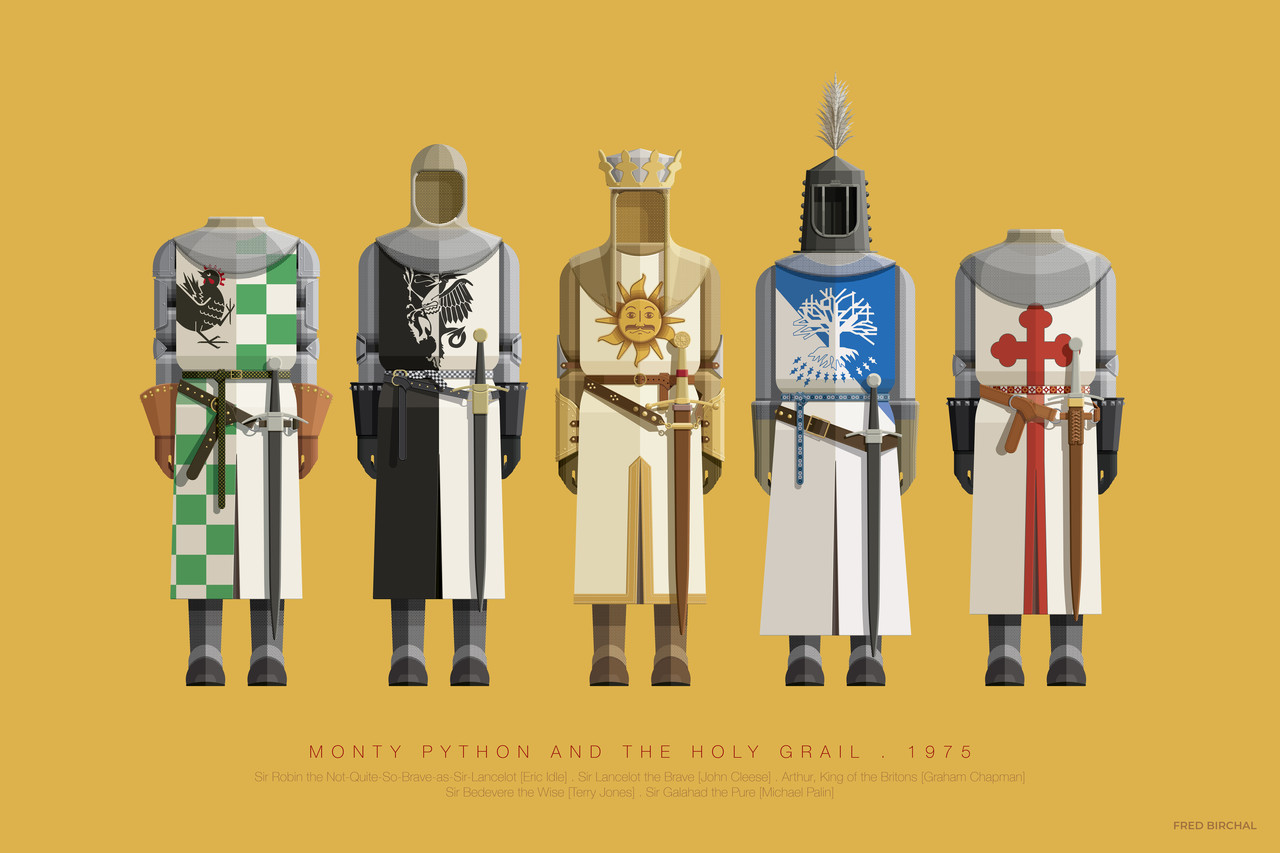
You know that feeling when you watch a movie from decades ago and the jokes just... land with a thud? Usually, comedy has the shelf life of an open carton of milk. But Monty Python and the Holy Grail 1975 is a weird anomaly. It shouldn't work. It’s a low-budget, muddy, chaotic mess that ends with a literal "cop-out" because they couldn't afford a real finale. Yet, here we are in 2026, and people are still quoting the Black Knight while losing their minds over a killer rabbit.
Honestly, the backstory of how this movie even got made is just as absurd as the film itself.
The Rock Stars Who Saved King Arthur
Most people don't realize that this masterpiece of British silliness was basically a tax dodge for rock legends.
In the mid-70s, the UK tax rate for high earners was a staggering 90%. If you were a member of Pink Floyd or Led Zeppelin, you were basically handing almost all your money to the government. To avoid this, these bands started looking for "investments" that could be written off.
Enter the Pythons.
No movie studio would touch a script about a king wandering around with a servant banging coconuts. It sounded like a disaster. But for Pink Floyd (who were busy recording The Dark Side of the Moon at the time) and Led Zeppelin, it was the perfect gamble. They, along with members of Genesis, Jethro Tull, and even Elton John, chipped in about £20,000 each.
They didn't do it because they expected a hit. They did it because they were fans of the Flying Circus TV show and wanted to help their friends while sticking it to the taxman. It’s wild to think that without "Stairway to Heaven," we might never have had the Holy Hand Grenade of Antioch.
Why Monty Python and the Holy Grail 1975 Looks So "Real"
The movie looks disgusting.
I mean that as a compliment. Unlike the polished, shiny Hollywood epics of the time, the Pythons wanted the Middle Ages to look like a swamp. Most of the budget went into authentic-looking (though often uncomfortable) costumes and mud. Lots of mud.
The Castle Problem
They had a nightmare with locations. Originally, they had permission to shoot at several National Trust castles in Scotland. But at the last second, the Trust read the script, realized the movie was "irreverent," and pulled the plug.
They were stuck.
In a panic, they found Doune Castle, which was privately owned. If you watch the movie closely, you'll notice that almost every castle in the film—Camelot, Castle Anthrax, Swamp Castle—is just Doune Castle shot from a different angle.
- Camelot? It’s a model. (Shhh!)
- The French Taunter's castle? Doune.
- The wedding massacre? Also Doune.
They even had to share hotel rooms to save money. On the first day of filming, the only camera they had broke within minutes. It was a miserable, cold, wet shoot in the Scottish Highlands. Graham Chapman, who played King Arthur, was struggling with severe alcoholism during production, often suffering from the DTs while trying to lead his knights across a ridge. The fact that he turned in such a stoic, hilarious performance is a miracle.
The Coconut Gag Wasn't Actually a Choice
Everyone knows the coconuts. It’s the most iconic bit in the movie.
But it wasn't a creative decision made in a writer's room for "artistic reasons." It was a desperate fix. They simply couldn't afford horses. Horses are expensive to rent, feed, and train. Plus, they’re a pain to film.
The Pythons decided that if they couldn't have horses, they’d just make fun of the fact that they couldn't have horses. It turned a budget deficit into the film’s best running gag. That’s the "Python way": if something is broken, lean into it until it’s funny.
The "Flesh Wound" Philosophy
The humor in Monty Python and the Holy Grail 1975 is deeply rooted in something called "incongruity." You have these characters taking themselves deathly seriously—like the Black Knight refusing to admit he's lost his limbs—while the world around them is falling apart.
John Cleese's stunt double for the Black Knight was actually a one-legged silversmith named Richard Burton. No, not that Richard Burton. Cleese loved telling people his stunt double was Richard Burton just to see their faces.
A Legacy of "Getting Away With It"
The ending of the film is perhaps the most controversial part. After building up to a massive battle between the knights and the French, the modern-day police just... show up and arrest everyone.
The camera gets knocked over. The film stops.
Many viewers at the time hated it. They felt cheated. But honestly? It was the ultimate meta-joke. They had run out of money for a big battle, so they decided to literally end the movie by having the "authorities" shut down the production. It’s the ultimate "cop-out," both literally and figuratively.
Actionable Insights for the Modern Fan
If you're looking to dive deeper into the world of the 1975 classic, don't just stop at the movie.
- Visit the real locations: If you’re ever in Scotland, Doune Castle is a pilgrimage site. They even give you coconuts at the front desk to take photos with. It's one of the few historical sites that fully embraces its "silly" history.
- Watch the "Lost" Scenes: There are several deleted animations by Terry Gilliam and sketches that didn't make the final cut but are available on anniversary Blu-rays. They explain a lot about the transition from the TV show to the big screen.
- Read Michael Palin’s Diaries: If you want the unvarnished truth about how miserable the shoot was, his journals from that era are gold. He talks about the freezing rain, the bad food, and the constant bickering between the two directors, Terry Jones and Terry Gilliam.
The real magic of Monty Python and the Holy Grail 1975 is that it feels like it was made by a group of friends who were just trying to make each other laugh. It wasn't designed by a committee. It wasn't "optimized" for an audience. It was just pure, anarchic joy.
Next time you watch it, pay attention to the background extras. Half of them are just the main cast in different hats because they couldn't afford a full crew. It’s a masterclass in how to make a masterpiece on a shoestring.
Check out the original 1975 theatrical trailers if you can find them—they’re almost as funny as the movie itself, featuring a voiceover that completely misleads the audience about what they're about to see.