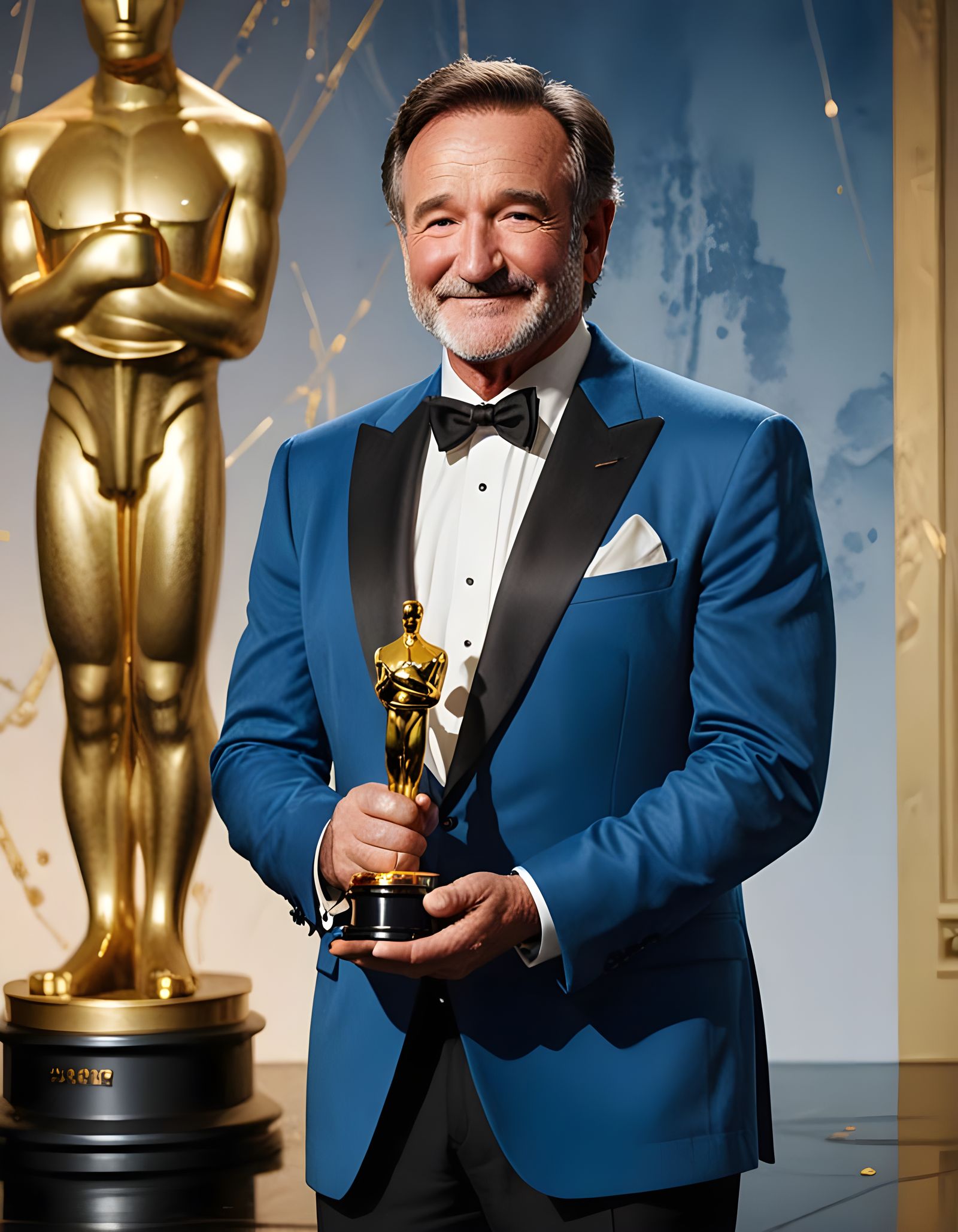
Robin Williams was a hurricane in a Hawaiian shirt. Most of us grew up watching him as a blue genie or a Scottish nanny, but the Academy of Motion Picture Arts and Sciences saw something else. They saw a man who could break your heart just as easily as he could make you spit out your drink. When you look at the robin williams oscar nominations, you aren't just looking at a list of movies. You're looking at the evolution of a man trying to prove he was more than just a fast-talking stand-up.
He was nominated four times. He won once. But the story of those four films—Good Morning, Vietnam, Dead Poets Society, The Fisher King, and Good Will Hunting—is really the story of Hollywood learning how to handle a genius who wouldn't stay in his lane.
The Comedy Shockwave: Good Morning, Vietnam (1987)
Before 1987, the idea of Robin Williams winning an Oscar seemed kinda far-fetched. He was the guy from Mork & Mindy. He was the guy who did cocaine jokes and manic impressions. Then came Barry Levinson’s Good Morning, Vietnam.
Williams played Adrian Cronauer, a real-life DJ in Saigon. It was the perfect bridge. Levinson basically told Robin to throw the script out during the radio broadcast scenes. He just let the cameras roll. Robin improvised rants about Richard Nixon and Elvis that were so fast the crew couldn't keep up.
But then, the movie shifts. You see Cronauer’s face when he realizes the horror of the war he’s supposed to be "cheering up." That was the moment. The Academy realized he wasn't just a clown; he was an actor with a terrifying amount of range. He lost the Best Actor trophy to Michael Douglas in Wall Street, but the seal was broken. Robin was officially a "serious" contender.
Seizing the Day: Dead Poets Society (1989)
If Good Morning, Vietnam was the introduction, Dead Poets Society was the confirmation. Honestly, it’s hard to imagine anyone else playing John Keating. Director Peter Weir actually had to keep Robin on a leash during filming. He didn't want the "funny guy." He wanted the soul.
There’s a famous story from the set where Robin started doing his usual riffing, and Weir just politely asked him to stop. He wanted the quietness of a teacher who actually cares.
- The Nominations: Best Actor
- The Vibe: Inspirational, tragic, and remarkably restrained.
- The Result: He lost to Daniel Day-Lewis for My Left Foot. Hard to argue with that one, but Keating became the role that defined Robin’s "mentor" persona for the rest of his life.
People still shout "O Captain! My Captain!" because of this movie. It wasn't just a nomination; it was a cultural shift.
The Fisher King and the Dark Side of Genius
By 1991, Robin was a powerhouse. The Fisher King is probably the weirdest of his robin williams oscar nominations. Directed by Terry Gilliam, it features Robin as Parry, a homeless man suffering from massive hallucinations and PTSD.
It’s a grueling performance. He’s running naked through Central Park one minute and screaming in agony the next. It showed a jagged, raw side of him that people weren't used to. He won the Golden Globe for it, but at the Oscars, he was up against Anthony Hopkins in The Silence of the Lambs.
Hannibal Lecter won. Again, Robin was the bridesmaid. You've gotta wonder if he started thinking he’d never actually take the statue home.
The Win: Good Will Hunting (1997)
Then came Sean Maguire.
By the late 90s, Robin was doing a lot of big-budget comedies. Mrs. Doubtfire and The Birdcage were massive hits. But two young kids from Boston—Matt Damon and Ben Affleck—wrote a script that required a very specific kind of gravity.
In Good Will Hunting, Robin plays a therapist who is grieving his dead wife while trying to reach a genius kid who’s throwing his life away. The bench scene in the park? That’s acting royalty. No jokes. No voices. Just a man talking about the difference between knowing things and living things.
When Mira Sorvino called his name at the 70th Academy Awards in 1998, the room exploded.
His speech was classic Robin. He joked about Ben and Matt being so young he wanted to see their ID. He thanked his father, who told him that if he wanted to be an actor, he should have a backup profession like welding. It was a "finally" moment for everyone in the building.
Why These Nominations Still Matter
It’s easy to look back and think he should have had ten nominations. Why wasn't he nominated for The Birdcage? What about One Hour Photo? He was terrifying in that.
The Academy has a history of being snobby toward "funny" people. They make comedians jump through hoops to prove they can cry on cue. Robin didn't just jump; he reinvented himself four different times.
What we get wrong about the robin williams oscar nominations is thinking they were just about the acting. They were about a guy who was constantly battling the perception that he was "too much." Each nomination was a shield against the critics who said he couldn't be still.
How to Appreciate the Legacy
If you want to really understand why these four movies matter, don't watch the highlights. Watch the silences.
- Watch the scene in Good Will Hunting where he just looks at the floor after Will says "I know."
- Watch his eyes in Dead Poets Society during the final scene.
- Look for the moments where he isn't talking.
That’s where the Oscar lived.
To dig deeper into his filmography, start by re-watching The Fisher King. It’s often the "forgotten" nomination, but it’s arguably his most complex work. Compare the manic energy of his 1987 performance to the grounded stillness of 1997. You’ll see a man who spent a decade mastering the loudest and quietest parts of the human experience.