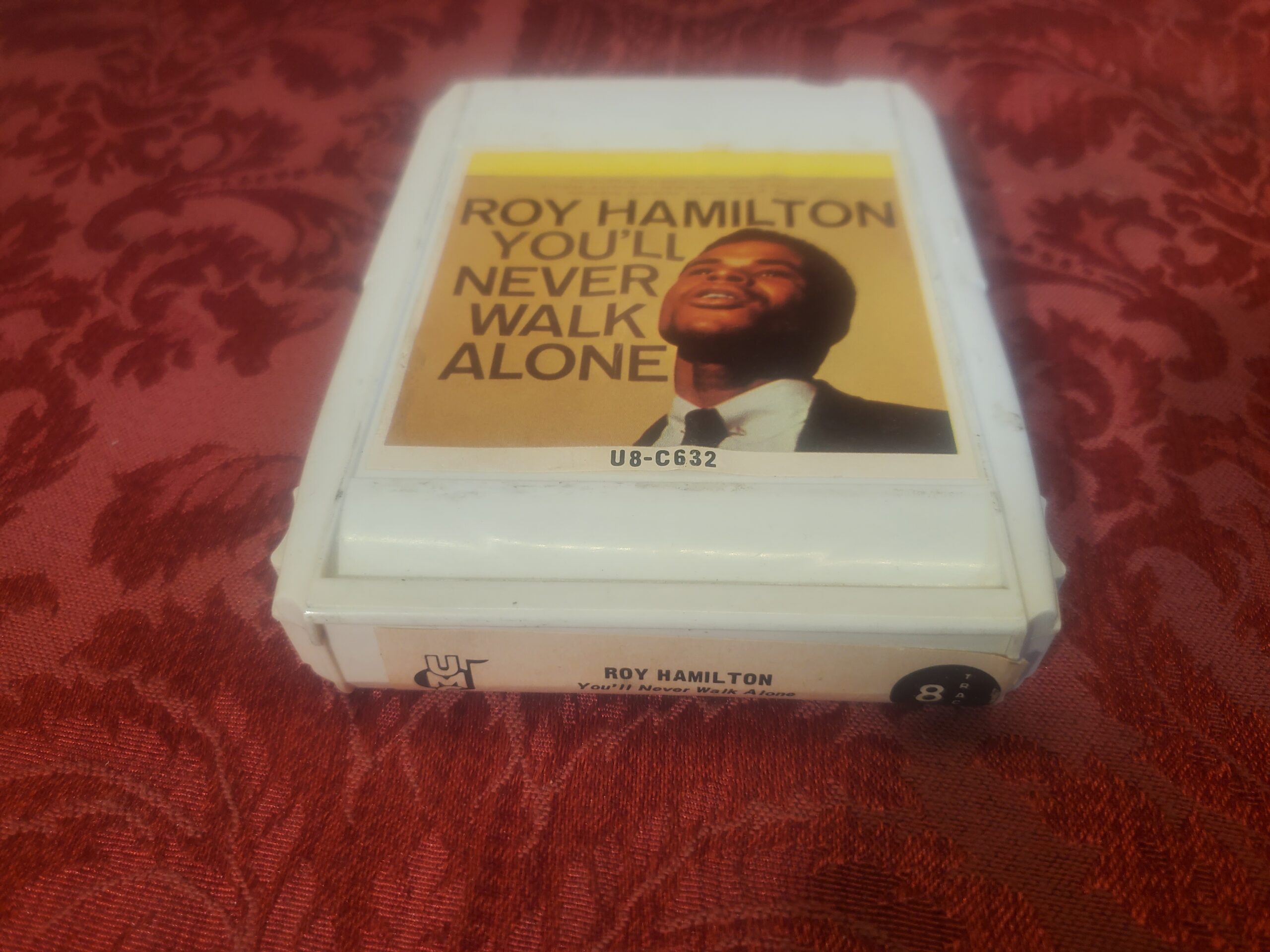
You’ve probably heard "You'll Never Walk Alone" a thousand times. Maybe it was the soaring Gerry and the Pacemakers version that echoes through Anfield during Liverpool matches. Or perhaps it was the classic showtune delivery from the 1945 musical Carousel. But honestly, if you haven’t sat down and really listened to Roy Hamilton You'll Never Walk Alone, you’re missing the actual bridge between the opera house and the birth of soul.
Roy Hamilton didn't just cover the song. He basically reinvented what a Black male vocalist could do with the Great American Songbook in 1954.
He was a heavyweight Golden Gloves boxer with the voice of an angel and the lungs of a titan. When he stepped into the studio for Epic Records, he brought a "semi-classical" training that made his baritone feel massive. But he also had that church-grown grit. That's the secret sauce. Most people think soul music started with Ray Charles or Sam Cooke, but Hamilton was doing it earlier, just differently. He took a Rodgers and Hammerstein Broadway ballad and turned it into a spiritual powerhouse.
The 1954 Recording That Changed Everything
When Epic Records released the single in early 1954, they weren't sure what would happen. At the time, Black artists were mostly shoved into the "race records" or R&B categories. Hamilton was different. He had this "crossover" appeal that made white audiences stop and listen.
His version of Roy Hamilton You'll Never Walk Alone spent eight weeks at number one on the Billboard R&B chart. Eight weeks! It even cracked the national Top 30, which was a huge deal for a Black singer in the pre-Civil Rights era.
The recording itself is kinda wild because the backing music is actually pretty sparse and, if we're being real, a little dated even for the fifties. But Hamilton’s voice? It’s sensational. He uses this technique where he almost "sobs" through the notes—a dramatic, operatic swell that makes your hair stand up. It’s not just singing; it’s a physical feat.
Why Elvis Presley Obsessed Over This Version
If you’re a fan of The King, you’ve seen the influence whether you realized it or not. Elvis Presley didn't just like Roy Hamilton; he idolized the guy. Seriously.
When Elvis recorded his own version of "You'll Never Walk Alone" years later, he wasn't looking at the Broadway sheet music. He was trying to channel Roy. In fact, if you listen to Hamilton’s B-side to "Walk Alone," a track called "I'm Gonna Sit Right Down and Cry (Over You)," you’ll find a song Elvis literally covered for his first album.
The connection went deep:
- Elvis adopted Hamilton's semi-operatic pacing.
- He mimicked that "big voice" vibrato.
- They finally met in 1969 at American Sound Studios in Memphis.
- Elvis actually gave Hamilton a song called "Angelica" because he felt Roy could do it more justice.
It’s sorta heartbreaking because Hamilton died later that same year at only 40 years old. He never got to see how his style basically paved the way for the "big ballad" era of the 1970s.
The Technical Magic of Roy's Baritone
Why This Specific Rendition Still Matters
Most modern listeners find old showtunes a bit "stiff." Hamilton’s version is the antidote to that. He famously described his own style as a mix: 50% Gospel, 30% Popular, and 20% Semi-Classical. You can hear that exact ratio in Roy Hamilton You'll Never Walk Alone.
The song starts out relatively quiet, almost like a prayer. Then, as he hits the "Walk on, walk on" section, he opens up the engine. It’s a masterclass in breath control. You don't hear him gasping for air; you just hear this wall of sound that feels like it could knock a building over.
The Liverpool Connection
Here’s a fun piece of trivia: a sailor friend of Gerry Marsden (of Gerry and the Pacemakers) reportedly brought a Roy Hamilton record back to England from the U.S. That's how the song eventually became the anthem for Liverpool FC. Without Roy’s R&B success making the song a "cool" standard, it might have just stayed a theater relic. Instead, it became a global symbol of hope.
The Tragic "Golden Boy" Legacy
Roy was known as the "Golden Boy of Song," but his career was a bit of a roller coaster. He had to retire briefly in 1956 due to tubercular pneumonia. When he came back, the world had moved on to Elvis-style rock and roll (ironic, right?).
He tried to adapt. He recorded "Don't Let Go" and "You Can Have Her," which were hits, but he never quite reclaimed the massive "God-like" status he had in the mid-fifties.
Still, his influence is everywhere. You hear him in Jackie Wilson’s soaring high notes. You hear him in the Righteous Brothers’ "Unchained Melody"—another song Roy took to #1 a decade before they did. If you like "blue-eyed soul," you’re essentially liking a genre that Roy Hamilton invented from the other side.
How to Truly Appreciate the Track Today
Don't just stream it on a tiny phone speaker. This song needs room to breathe.
- Find a high-quality mono recording. The early stereo re-channels often mess with the vocal warmth.
- Listen for the "sob." Notice how he breaks his voice on words like "storm" or "dark." It’s intentional and deeply soulful.
- Compare it to the Carousel soundtrack. You’ll realize Roy isn't just "covering" it; he's stripping away the theatrical artifice and making it a human survival anthem.
Roy Hamilton didn't just walk through the storm; he sang it into submission. His 1954 masterpiece remains the definitive version for anyone who values raw, technical vocal power over polished pop production.
Your next move: Go to a streaming platform and play "You'll Never Walk Alone" followed immediately by his version of "Unchained Melody." Notice the way he builds tension. To understand the transition from the big-band era to soul, you have to spend time with the Golden Boy. You might also want to look up his 1960 album Spirituals to hear where that power originally came from.