You know the tin. That deep, royal blue circular container with the pastoral scene of a thatched-roof farmhouse. You’ve probably seen it sitting on a coffee table at your grandmother’s house, or maybe tucked away in the back of a pantry during the holidays. But there's a fifty-fifty chance that when you pry that lid off, you won't find a single Royal Dansk Danish butter cookie. Instead, you’ll find a chaotic nest of silver needles, spools of emerald green thread, and maybe a few loose buttons.
It’s the great disappointment of childhood, right?
But honestly, the fact that we all have this shared memory says a lot about the brand's staying power. Since 1966, Royal Dansk has been the de facto standard for what a "fancy" cookie should be, even though they’re sold in basically every drugstore and supermarket across the globe. They managed to turn a simple blend of flour, butter, and sugar into a global icon of hospitality.
The Butter Is the Whole Point
A lot of people think all shortbread is the same. It isn't. To understand why a Royal Dansk Danish butter cookie tastes the way it does, you have to look at the ingredients. Or rather, the lack of them. There are no preservatives here. No artificial colors. Just wheat flour, butter, sugar, desiccated coconut, and eggs.
Butter is the soul of the operation.
In Denmark, the dairy industry is a point of national pride. The Kelsen Group, which produces Royal Dansk, relies on high-fat butter that gives the cookies that specific "melt-away" texture. If you use cheap oil or margarine, you get a snap. When you use real butter, you get a crumble that dissolves the second it hits your tongue. It’s a delicate balance. Too much butter and the cookie loses its shape in the oven; too little, and you might as well be eating a cracker.
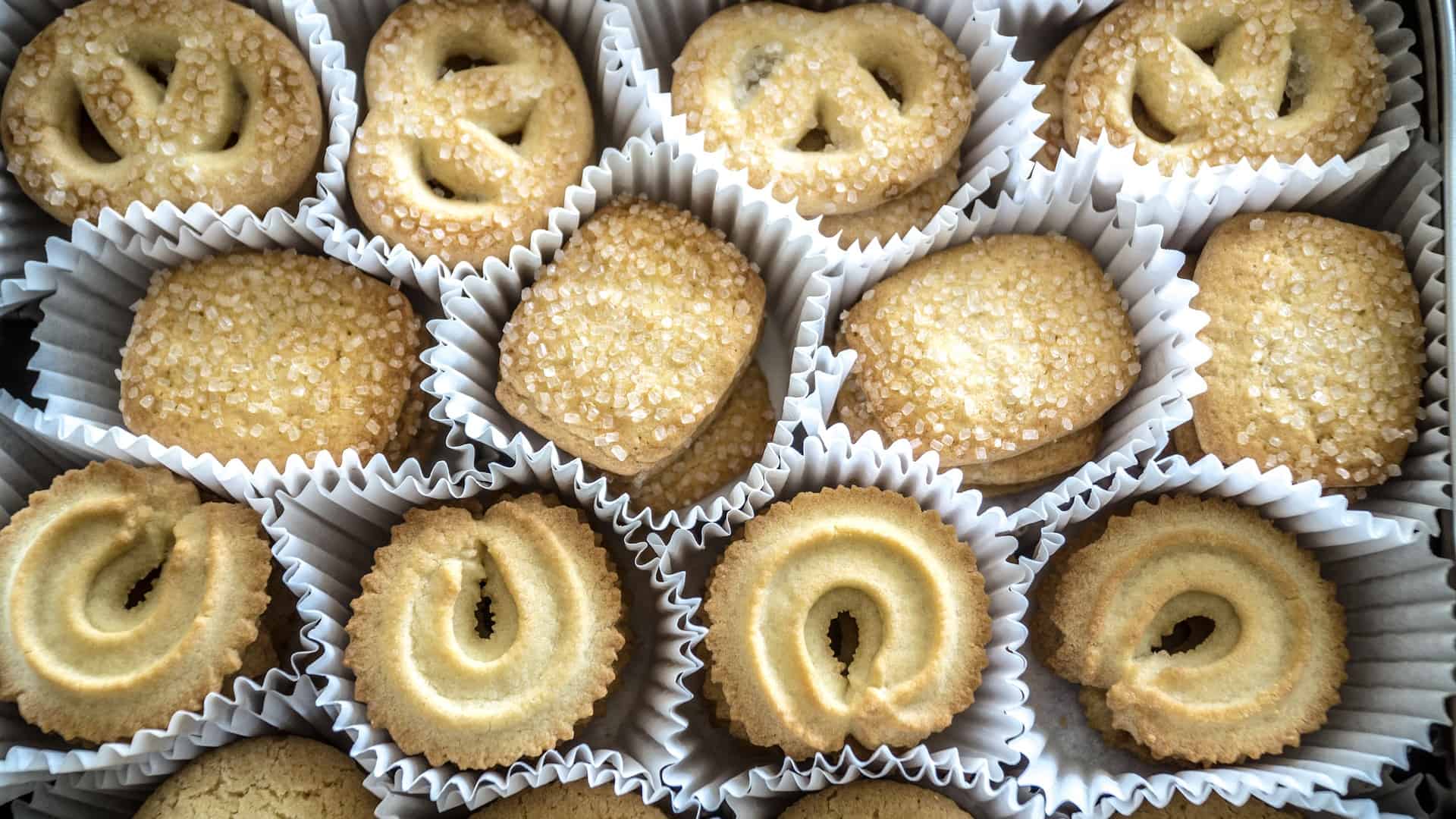
Have you ever noticed how different shapes taste different? It’s a psychological trick, mostly. They all come from the same basic dough, but the surface area changes how they bake. The "Pretzel" style has those large grains of sugar on top that provide a crunch, while the "Vanilla Ring" has a lighter, airier feel because of its extruded shape. The "Finnish Style" (the rectangular ones) and the "Country Style" (the round ones with coconut) offer a totally different mouthfeel.
It’s a curated experience in a metal box.
Why the Blue Tin Actually Matters for Freshness
The tin isn’t just about looking "royal." It’s functional.
Most cookies today come in plastic trays wrapped in film. That’s fine for a week, but air is the enemy of fat. Because these cookies have such a high butter content, they can go rancid if exposed to oxygen for too long. The tin provides an airtight seal that keeps the cookies crisp for months. It’s why they’re the ultimate "emergency guest" food. You can keep a tin in the cupboard for half a year, and the moment a neighbor drops by, you pop the lid and everything is as fresh as the day it was packed in Nørre Snede.
The Kelsen Group actually produces these in two main facilities in Denmark. They export to over 130 countries. Think about that scale. Every single one of those billions of cookies is baked in the same small Scandinavian country. They haven't outsourced the production to massive factories in other continents because the "Danish" part of the name is legally protected. To be called a Danish Butter Cookie in many markets, there are specific standards you have to meet.
The Sewing Kit Phenomenon
We have to talk about the sewing kit. It’s a global meme before memes existed. From Brazil to Vietnam to Norway, the "Royal Dansk Sewing Tin" is a universal constant.
Why?
Sustainability before it was a buzzword. The tins were too nice to throw away. In the post-war era and through the 70s, household items were meant to be repurposed. The diameter of the tin is perfectly sized for holding standard spools of thread. It's deep enough to hold scissors but shallow enough that you aren't digging for a thimble. It’s unintentional genius in industrial design.
How to Spot a "Fake" Tin
If you walk into a discount store around Christmas, you’ll see dozens of imitators. They use blue tins. They have pictures of cookies. But if you look at the label, you'll see "vegetable oil" or "interesterified fat" listed before butter.
That is not a Royal Dansk Danish butter cookie.
The real deal will always have the Royal Appointment seal. Since 2009, they have been a Purveyor to the Royal Danish Court. This isn't just a marketing gimmick; it's a formal designation in Denmark. If the quality slipped, they’d lose the right to use that crown on the tin.
Also, check the weight. A standard large tin is usually 12 oz (340g) or 1.5 lbs. The imitators often use slightly smaller tins or thicker corrugated paper liners to hide the fact that there are fewer cookies inside. Royal Dansk uses those iconic white fluted paper cups. Five distinct styles. Usually stacked three or four deep.
Nutritional Reality Check
Look, nobody is eating these for their health. They are a treat.
One serving is usually four cookies, which clocks in at about 160 calories. The kicker is the saturated fat—about 5 grams per serving. That’s the price of butter. But because they are so rich, they actually satisfy a sweet tooth faster than a bag of "low-fat" cookies filled with high-fructose corn syrup. You eat three or four with a cup of coffee and you're done.
It’s an exercise in portion control, provided you don't lose your mind and eat an entire layer in one sitting. Which, let's be honest, we've all done.
The Best Way to Serve Them (Beyond Just Eating Them)
If you want to be a bit "extra," don't just put the tin on the table.
- The Coffee Dip: The Vanilla Ring is the best for dipping. Its structure is dense enough that it won't break off and drown in your latte, but porous enough to soak up the caffeine.
- The Cheesecake Crust: If you have a few broken ones at the bottom of the tin, pulse them in a blender. Use them instead of graham crackers for a cheesecake base. The butter content in the cookies means you need less added butter to make the crust stick.
- The Tea Pairing: Earl Grey is the move. The bergamot in the tea cuts through the heavy fat of the cookie beautifully.
Actionable Takeaways for the Cookie Connoisseur
Next time you’re standing in the aisle staring at the blue tins, remember a few things to get the best experience:
- Check the "Bake Date": While they last forever, a tin bought closer to its production date will always have a more pronounced "creamy" scent when opened.
- Listen to the Tin: Give it a very gentle shake. If it sounds like a box of broken glass, it’s been mishandled in shipping. You want a dull thud, indicating the cookies are packed tight and whole.
- Temperature Matters: If you store them in a cool, dry place (not the fridge, just a cool pantry), the butter stays stable. If they get too warm, the fats can bloom, giving the cookie a slightly white, dusty look. It's still safe to eat, but the texture will be off.
- Repurpose with Purpose: When you finish the tin, don't just toss it. If you aren't into sewing, they are the best containers for storing holiday ornaments, loose LEGO bricks, or even হয়ে a makeshift "catch-all" for keys and mail in the entryway.
The Royal Dansk Danish butter cookie is a rare example of a product that hasn't changed because it didn't need to. In a world of "new and improved" formulas that usually just mean "cheaper ingredients," there is something deeply comforting about a cookie that tastes exactly the same in 2026 as it did in 1986. It's butter, sugar, and flour. It's a blue tin. It's exactly what it claims to be.