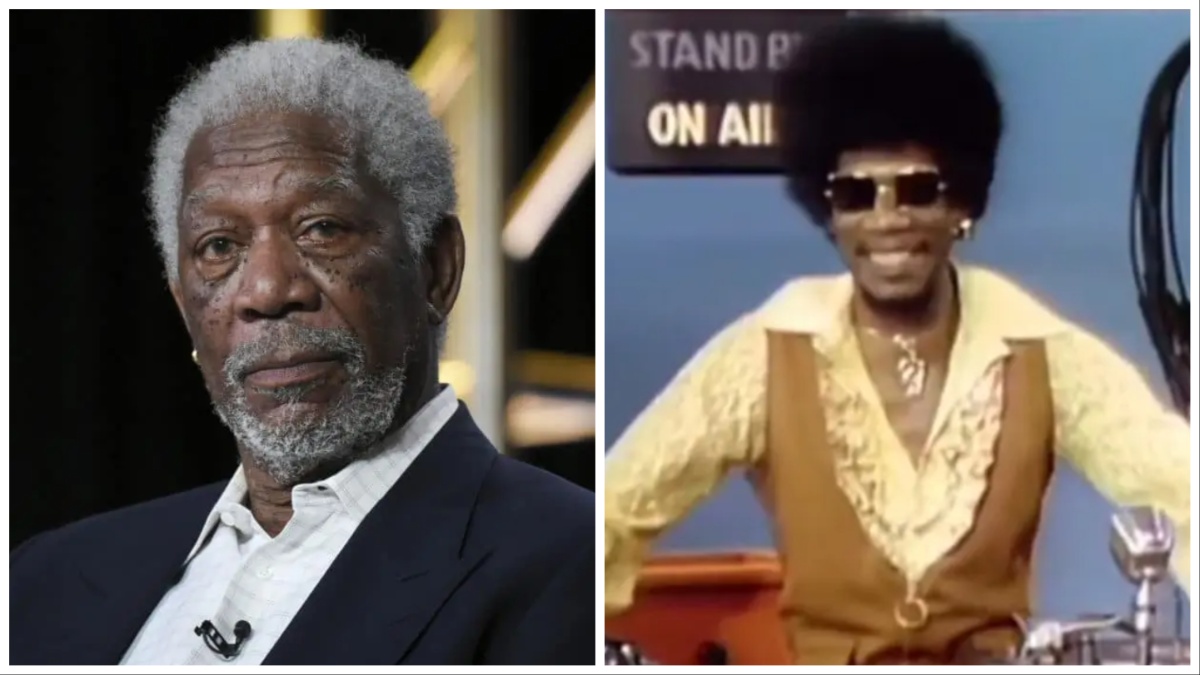
You know that voice. It’s the voice of God, the voice of Red in The Shawshank Redemption, and the voice that could probably narrate a grocery list and make it sound like a cinematic masterpiece. But before Morgan Freeman was the elder statesman of Hollywood, he was a guy in a colorful hat singing about vowels.
Honestly, it’s one of those "wait, what?" facts that feels like a glitch in the Matrix. Long before the Oscars and the global fame, there was The Electric Company.
The Electric Company: Not What You Think
When people search for "Morgan Freeman electric company," they aren't looking for a utility bill provider. They’re looking for a piece of 1970s television history. From 1971 to 1977, Freeman was a staple on the PBS kids' show The Electric Company.
It wasn’t just a show. It was a revolution. Produced by the Children’s Television Workshop—the same geniuses behind Sesame Street—this program was designed for kids who had "graduated" from Big Bird but still struggled with reading. It used sketch comedy, psychedelic 70s graphics, and high-energy music to teach grammar.
And right in the middle of it was Morgan Freeman.
The Man of a Thousand (Educational) Faces
Freeman didn't just have a bit part. He was a powerhouse. Most people remember him as Easy Reader, the coolest man to ever grace public television. Easy Reader didn’t walk; he glided. He wore denim vests and large sunglasses, obsessed with reading every sign, label, and book in sight. It was a brilliant way to make literacy look like the ultimate "cool" factor.
But he didn't stop there. He was Mel Mounds, the smooth-talking DJ who introduced musical segments with a rhythm that felt like early hip-hop. He was Vincent the Vegetable Vampire, a hilarious parody of Dracula who—instead of blood—craved leafy greens.
It’s wild to look back at. You see the same gravitas he brings to his modern roles, but it's wrapped in 1970s kitsch. The range was already there. He was doing sketch comedy with Rita Moreno and Bill Cosby, hitting comedic beats that most dramatic actors would find terrifying.
The Complicated Reality of Being Easy Reader
Here’s something most people get wrong: they assume it was a golden era for him. It wasn't.
While the show gave him financial stability and a steady paycheck—something every actor dreams of—Freeman has been candid about how he felt at the time. He’s described it as a "very unhappy period" in his life.
Why? Because he was a serious stage actor. He wanted to be doing Shakespeare and gritty dramas. Instead, he was stuck in a "groove" that felt like a dead end. He was worried he’d be the "Easy Reader" guy forever.
He stayed for six seasons, but when he left in 1975, he didn't look back. He has famously said he doesn't even think about the show anymore, though he’s grateful for the stability it provided his family.
The Modern Connection: Why We’re Still Talking About It
So, why does The Electric Company keep popping up in 2026?
Part of it is pure nostalgia. But there’s also a weirdly modern twist. Freeman has become a massive advocate for technology and sustainability in his later years. This has led to some confusion among fans who hear "Freeman" and "Electric" and assume he’s started a green energy firm.
He hasn't. But he is a huge fan of electric vehicles.
In a 2016 interview with CNBC, Freeman admitted he’s a major Tesla investor. He’s a self-proclaimed "huge fan" of Elon Musk’s vision. He even helped launch a luxury black-car service called Motev with his long-time driver, Robert Gaskill.
What makes Motev special? It was founded on a fleet of all-electric Teslas.
It’s a poetic circle. The man who started his career on The Electric Company is now one of the most prominent private backers of the electric car revolution. He isn't selling you power for your house, but he’s certainly betting his money on a high-voltage future.
Beyond the Screen: The Bee Sanctuary
If you really want to know what Freeman is doing with his "power" these days, look at his 124-acre ranch in Mississippi. In 2014, he decided to do something about the global decline of bee populations.
He didn't just write a check. He converted his entire ranch into a bee sanctuary.
He imported 26 hives from Arkansas and planted acres of clover, lavender, and magnolia trees. In interviews, he’s joked about how he doesn't even wear a beekeeping suit. He just goes out there and feeds them sugar water.
"I’ve never been stung," he told Jimmy Fallon.
It sounds like a tall tale, but it’s 100% real. It’s part of a broader pattern: Freeman uses his influence to highlight systems that keep the planet running—whether that’s literacy for kids, electric infrastructure for cars, or the literal pollination of our food supply.
The Legacy of a Legend
Looking back, The Electric Company was the foundation. It taught a generation of kids that words have power. It taught Morgan Freeman that he could command an audience, even if he was wearing a ridiculous costume.
If you're looking to tap into that same energy today, you won't find it on a utility grid. You'll find it in the archives of PBS or in the silent hum of an electric car fleet in Los Angeles.
Actionable Next Steps
- Watch the Classics: Go to YouTube and search for "Morgan Freeman Easy Reader." Seeing him in his 30s is a trip, and you can see the origins of that famous vocal cadence.
- Support Literacy: The mission of the show still matters. Check out Sesame Workshop to see how they've modernized the "Electric Company" approach for today's digital world.
- Go Green: If Freeman’s investment in Motev and Tesla inspires you, look into local EV car-sharing services or sustainable transport options in your city.
- Save the Bees: You don't need 124 acres. Planting a small patch of lavender or clover in your backyard or even a window box helps local pollinators just like Freeman’s ranch.
The story of Morgan Freeman and his "Electric Company" days isn't just a trivia fact. It’s a reminder that everyone starts somewhere—sometimes in a place they don't even like—to eventually become the person the world listens to.