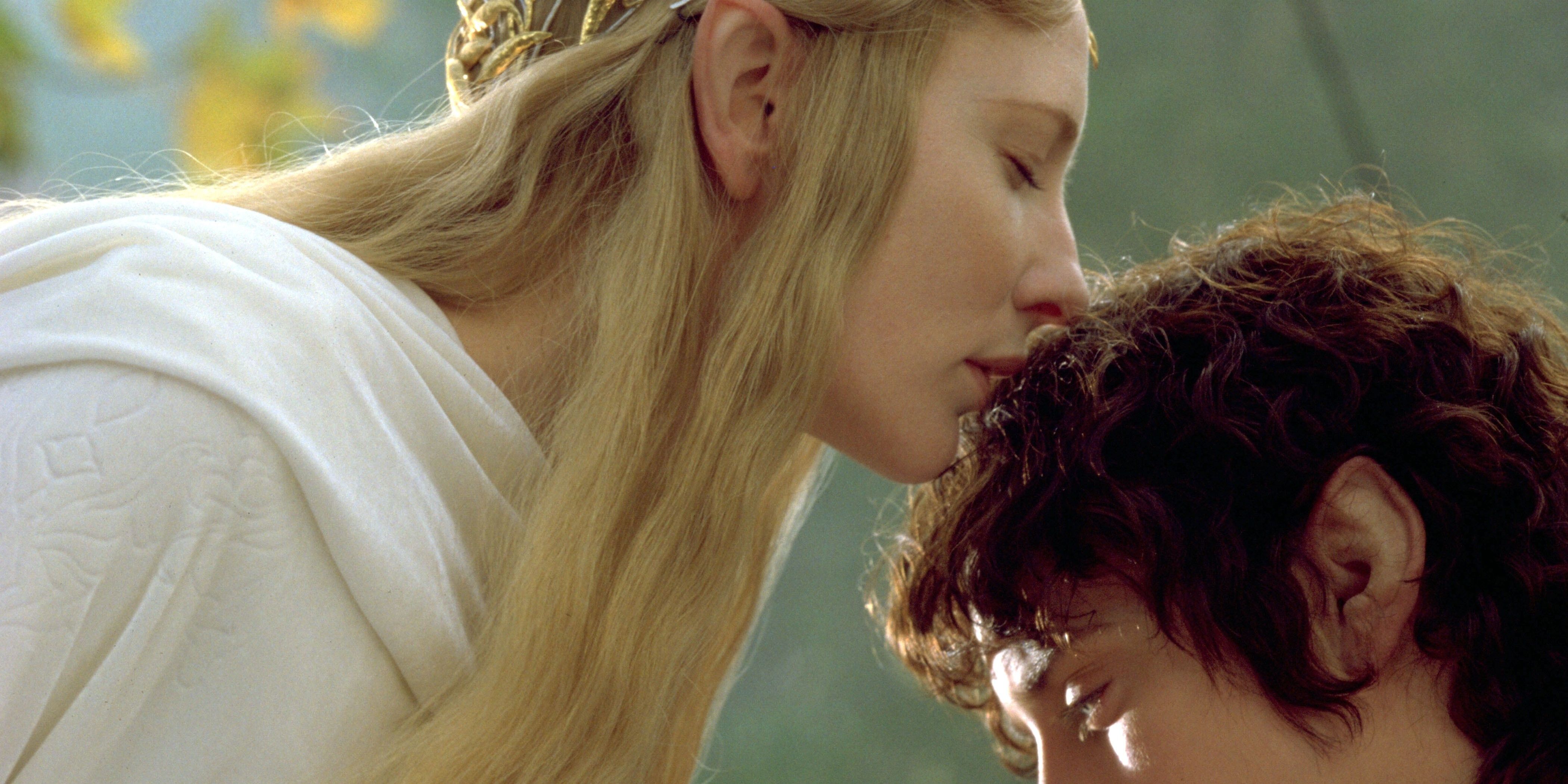
She is the most powerful being left in Middle-earth. Honestly, it isn't even close. When we first meet the Fellowship of the Ring Galadriel in the woods of Lothlórien, she isn't just a tall blonde lady in a white dress. She is a relic. A living memory of a time before the Sun and Moon even existed. Most fans who only know the movies see her as a spooky, ethereal queen who almost steals the Ring, but the reality buried in J.R.R. Tolkien’s letters and The Silmarillion is way more intense. She’s actually the aunt of Elrond. She’s thousands of years older than almost everyone else in the story.
You’ve probably seen the scene where she goes "all dark" and starts screaming about a Queen. That moment defines her for most people. But if you look at the text, Galadriel’s role in the Fellowship’s journey is less about magic and more about a very long, very painful test of her own ego. She had been waiting for that moment for three ages of the world.
The Lady of Light was actually a Rebel
People forget Galadriel didn't just spawn in a forest. She was born in Valinor. That’s basically the equivalent of the Undying Lands, the place where the gods live. She was one of the leaders of the Noldor rebellion. She didn't leave because she was evil; she left because she wanted to rule a kingdom of her own. She was proud. Stubborn.
By the time we see the Fellowship of the Ring Galadriel in the Third Age, she’s the only one of those original rebels left. Everyone else is dead or has sailed back across the sea in shame. She’s stayed behind for centuries, using her Ring of Power, Nenya, to keep her forest from changing. Lórien is a bubble. It’s a time capsule. When Frodo and the gang show up, they are stepping into a physical manifestation of her refusal to let go of the past.
It’s kinda tragic when you think about it.
She knows that if the One Ring is destroyed, her ring—the Ring of Adamant—loses its power too. Her forest will fade. Her home will become just a regular old woods. To save the world, she has to agree to lose everything she’s built. That is the subtext of every look she gives Frodo.
Why the "Dark Galadriel" scene matters so much
In the film, Cate Blanchett turns into a green-tinted, radioactive-looking phantom. It’s a bit much for some book purists, but it captures the vibe. When she says, "In place of a Dark Lord, you would have a Queen," she isn't just being dramatic. She’s one of the few people in the world who could actually use the Ring to its full potential. Unlike Boromir, who would just become a warlord, or Gandalf, who would become a tyrant out of a desire to do good, Galadriel would become a goddess.
And she wants it.
The temptation of the Fellowship of the Ring Galadriel is the climax of her entire character arc spanning five thousand years. By refusing the Ring, she finally accepts that her time in Middle-earth is over. She "passes the test." This is why she says she will "diminish and go into the West." It’s her resignation letter.
What was actually in that Mirror?
The Mirror of Galadriel is a weird plot device. It shows things that were, things that are, and things that yet may be. But notice how she doesn't use it to help them win the war. She doesn't give Frodo a GPS map to Mount Doom.
She uses it to show him what happens if he fails.
The Mirror is a psychological tool. It’s meant to harden Frodo’s resolve. Tolkien was very specific about the fact that Galadriel cannot see the future with 100% certainty. Even she is guessing. But her "magic" is really just a deep, ancestral knowledge of how the world works. She’s lived so long that she can see the patterns.
The Gifts: More than just Souvenirs
When the Fellowship leaves Lórien, Galadriel hands out gifts. In the movies, this feels like a graduation ceremony. In the books, these items are strategic assets.
Take the Phial of Galadriel. It contains the light of Eärendil’s star. That star is actually one of the Silmarils—the gems that started all the wars in the First Age. By giving this to Frodo, she is literally giving him a piece of the ancient world’s holy light to take into the darkest pit of the modern world. It’s a bridge between the ages.
Then there’s Gimli.
The interaction between the Fellowship of the Ring Galadriel and Gimli the Dwarf is one of the most important moments for the "lore nerds." Thousands of years ago, an Elf named Fëanor (who was a total jerk) asked Galadriel for a single strand of her hair because it supposedly captured the light of the Two Trees of Valinor. She told him no. Three times.
When Gimli asks for one hair, she gives him three.
This isn't just her being nice to a Dwarf. It’s a massive middle finger to her ancient, arrogant relative. It shows she’s changed. She’s no longer the proud princess of the Noldor; she’s a leader who recognizes the worth of a "lesser" creature. This one act did more to heal the rift between Elves and Dwarves than a thousand years of diplomacy ever could.
The Problem with the "Elf-Witch" Reputation
In the book, Boromir and even some of the Rohirrim are terrified of Galadriel. They call her the "Mistress of Magic" or the "Witch of the Golden Wood." There’s a rumor that she weaves webs of deceit.
This is a classic Tolkien theme: humans are afraid of what they don't understand. Because Galadriel lives outside of linear time, her motives seem alien. But she’s not a witch in the sense of casting spells for evil. She’s a "sub-creator." She uses her power to preserve beauty, not to dominate minds. When the Fellowship of the Ring Galadriel meets the company, she tests their hearts by looking into their eyes and offering them what they most desire.
Boromir couldn't handle it. He felt like she was trying to tempt him. In reality, she was just showing him his own reflection.
Real-world impact and the Jackson Adaptation
Peter Jackson made a very specific choice to make Galadriel the narrator of the prologue. It was a brilliant move. It establishes her as the "voice of history." While Elrond is the tactical leader of the resistance, Galadriel is the spiritual anchor.
However, the films sort of skip over the fact that she’s basically Celeborn’s boss. In the books, Celeborn is a respected Lord, but it’s very clear that Galadriel is the one with the vision. She founded the White Council. She was the one who first suspected Saruman was a traitor. Without her, the Fellowship wouldn't have made it past the Great River. She provided the boats, the cloaks, and the lembas bread.
Basically, she funded the entire expedition.
Why she didn't just fly to Mordor?
The "Eagle" question is a meme, but the "Galadriel" question is more interesting. Why didn't the Fellowship of the Ring Galadriel just march to Mordor and blast Sauron?
The answer is Nenya. Her ring was defensive. It was designed to preserve, not to destroy. If she had left Lórien to go to war, her forest would have been over-run by Orcs in a week. Her power was tied to the land she protected. This is the "limitation" of the Elves in the Third Age—they are powerful, but they are stationary. They are protecting their little pockets of paradise while the rest of the world burns.
Actionable Insights for Fans and Writers
If you're looking to understand the Fellowship of the Ring Galadriel better, or if you're writing your own high-fantasy world, there are some key takeaways here.
- Nuance in Power: Galadriel is powerful because of what she refuses to do, not just what she does. True strength in Tolkien’s world is the ability to turn away from the ultimate weapon.
- The Weight of Time: When writing immortal characters, remember that they shouldn't care about the same things humans do. Galadriel is thinking in centuries, not days.
- Symbolism Matters: Every gift she gave had a historical precedent. Research the "backstory of the backstory" to find the real meaning.
If you want to dive deeper into her history, stop reading wikis and go straight to Unfinished Tales. There is a whole section called "The History of Galadriel and Celeborn" that shows just how much Tolkien struggled to get her character right. He actually kept changing her origin story because he wanted her to be more and more "perfect" as he got older.
Next time you watch the movie, look at her hands. She’s almost always wearing Nenya, but it’s only visible to Frodo because he’s the Ring-bearer. It’s those tiny details that make the Fellowship of the Ring Galadriel the most complex character in the entire legendarium. She is the bridge between the gods of the past and the humans of the future.
To really grasp her influence, you have to look at the "Lament for Lórien" poem she sings as they leave. It’s not a song of victory. It’s a song of goodbye. She knew the moment the Fellowship arrived that her time was over. And she helped them anyway. That is the definition of a hero.
Don't just watch the scene where she turns green. Read the chapter "Farewell to Lórien" in the book. It’s where the real emotional weight of the story lives. You'll see a queen who is tired, wise, and ultimately, very lonely.
To explore more about the lore of the Third Age, check out the letters of J.R.R. Tolkien, specifically Letter 131. It provides the most concise explanation of why the Elven Rings had to lose their power. Understanding that mechanics makes her sacrifice in The Fellowship of the Ring hit much harder. Galadriel didn't just help destroy a dark lord; she knowingly voted for the end of her own magical world. That's the real story.