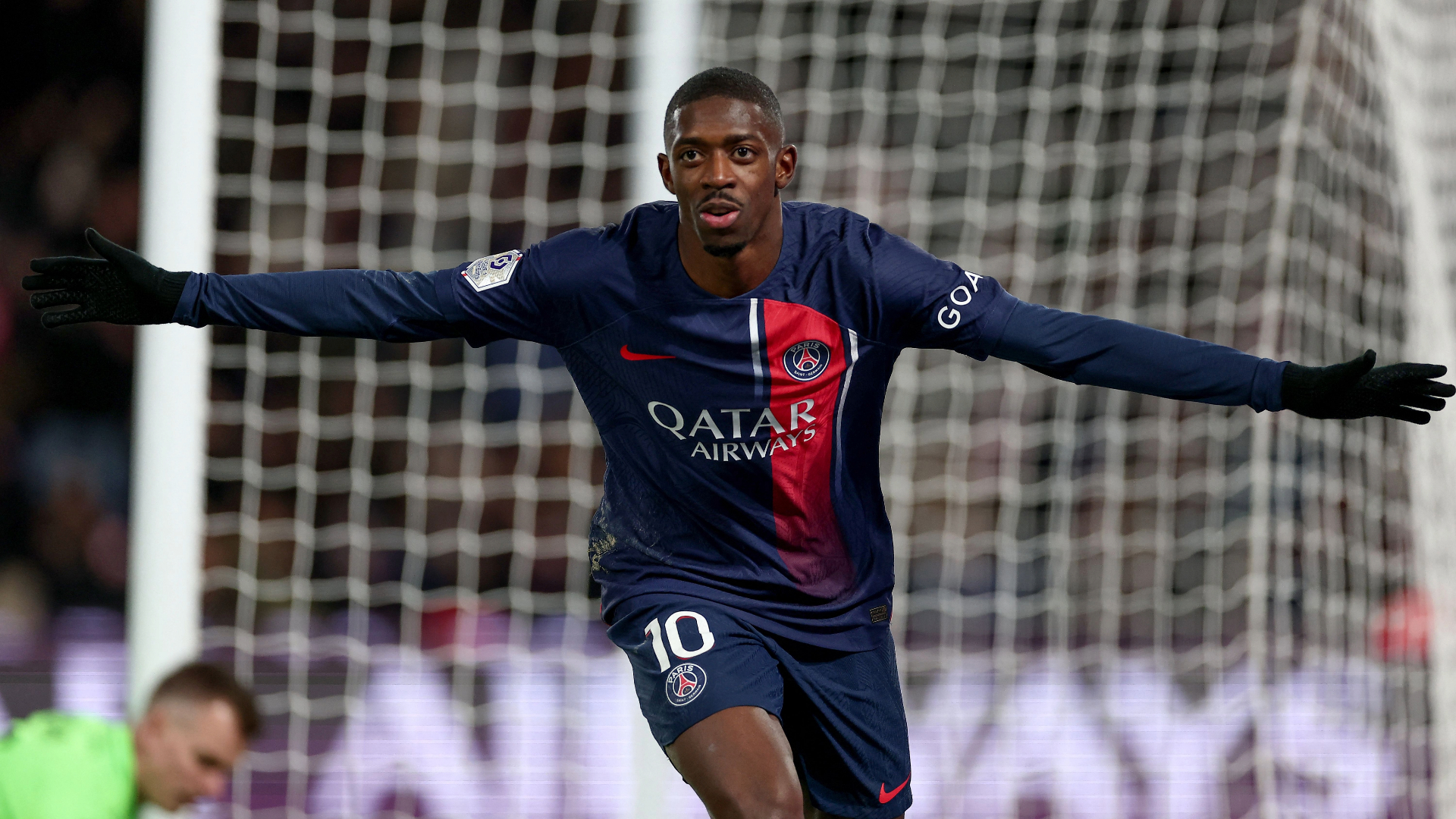
He is fast. Sometimes too fast for his own hamstrings. But if you are trying to figure out what number is Dembele wearing right now, the answer depends entirely on whether he's sprinting down the wing for Paris Saint-Germain or lining up for the French national team. Football fans get confused because Ousmane Dembele has treated his kit numbers like a game of musical chairs over the last decade.
Honestly, it is a bit of a headache to track.
Right now, Ousmane Dembele wears the number 10 shirt for Paris Saint-Germain (PSG). He didn't start with it, though. When he first landed in Paris from Barcelona, he actually took the number 23. It was only after Neymar Jr. packed his bags for Al-Hilal in Saudi Arabia that the iconic 10 became vacant. Dembele swapped almost immediately.
For France? That’s a different story. He usually wears number 11 for Les Bleus.
From Rennes to Dortmund: The Early Years
When Dembele first burst onto the scene at Rennes, he wasn't the global superstar he is today. He was just a skinny kid with terrifying dribbling skills. Back then, he wore number 23. It’s funny how things come full circle, considering that’s the same number he initially picked at PSG years later.
Then came the move to Borussia Dortmund.
In Germany, he took the number 7. It suited him. The "7" is traditionally for the flashy winger, the guy who hugs the touchline and makes fullbacks question their career choices. He was electric in that shirt. So electric, in fact, that Barcelona came knocking with a mountain of cash to replace a departing Brazilian legend.
The Heavy Burden of the Number 11 at Barcelona
When Dembele arrived at the Camp Nou in 2017, the pressure was suffocating. He was brought in to fill the void left by Neymar. Naturally, he took Neymar’s number 11.
It wasn't easy.
Injuries defined his early years in Spain. He would show flashes of absolute brilliance—cutting inside on his left, then his right, leaving defenders stuck in the mud—only to pull a muscle and vanish for three months. For several seasons, if you asked "what number is Dembele," the answer was 11, but you usually saw that number on a tracksuit on the bench rather than on the pitch.
Eventually, things shifted. After Antoine Griezmann left Barca to return to Atletico Madrid, the prestigious number 7 opened up. Dembele switched to 7 for the 2021-22 and 2022-23 seasons. He seemed to prefer it. It felt like a fresh start, a way to shed the "Neymar replacement" label and build his own legacy under Xavi Hernandez. He actually played some of his best football in that number 7 shirt, leading La Liga in assists for a stretch.
Why the Number 10 at PSG Matters
Taking the 10 in Paris is a big statement. Huge.
In the world of football, the 10 isn't just a digit. It’s a status symbol. It’s the number of Ronaldinho, Ibrahimovic, and Messi. By taking the 10, Dembele signaled that he was no longer just a supporting act. At PSG, especially in the post-Mbappe era, he is expected to be the creative heartbeat of the team.
He’s not a traditional "10" who sits in the pocket and sprays passes. He’s still a winger at heart. But the number change reflects his seniority. You’ve got to realize that Dembele is now one of the "older" guys in a very young, transitioning PSG squad.
- Rennes: 23
- Dortmund: 7
- Barcelona: 11, then 7
- PSG: 23, now 10
- France National Team: 11
The International Jersey
When you see him playing for France, look for the number 11.
Kylian Mbappe has the 10 locked down for the national team (and likely will for the next decade). Antoine Griezmann long held the 7. This left Dembele with the 11, which he has worn through multiple major tournaments, including the 2022 World Cup in Qatar. It’s a bit ironic—the number he struggled with at Barcelona is the one he’s most consistent with for his country.
Why do players like Dembele change numbers so often?
It’s mostly about branding and hierarchy.
When a player joins a mega-club like PSG or Barcelona, they can't always get their "favorite" number. Someone else usually owns it. You take what is available—like the 23—and you wait. You wait for a transfer, a retirement, or a contract termination. The moment a more "marketable" number like 7, 10, or 11 opens up, the player's agents and the club's marketing team move in.
Selling jerseys is a massive part of the business. A "Dembele 10" jersey sells significantly better than a "Dembele 23" jersey. It’s just the way the industry works.
Tracking the Stats Behind the Numbers
If you're a bettor or a hardcore stat-head, you might wonder if the number on his back changes his output. Honestly? Not really. Dembele’s game is about chaos. Whether he’s wearing 7, 11, or 10, his expected assists (xA) remain high because his style is predicated on high-risk, high-reward crosses and dribbles.
The only real difference is the "eye test." There is something inherently "right" about seeing a player of his flair wearing the number 10. It fits the persona. It fits the price tag.
If you are buying a kit today, make sure you check the squad list first. If it's a PSG shirt, go with 10. If it's the blue of France, stick with 11.
Next Steps for Fans:
To stay truly updated on player movements and squad number changes before the new season starts, keep an eye on the official Ligue 1 registration filings. Squad numbers usually lock in about two weeks before the opening matchday. If PSG makes a massive summer signing, numbers could shift again, though it's unlikely Dembele gives up the 10 anytime soon. You should also verify the roster on the official PSG website before purchasing any customized merchandise, as mid-season changes are rare but cup competitions sometimes force temporary number assignments.