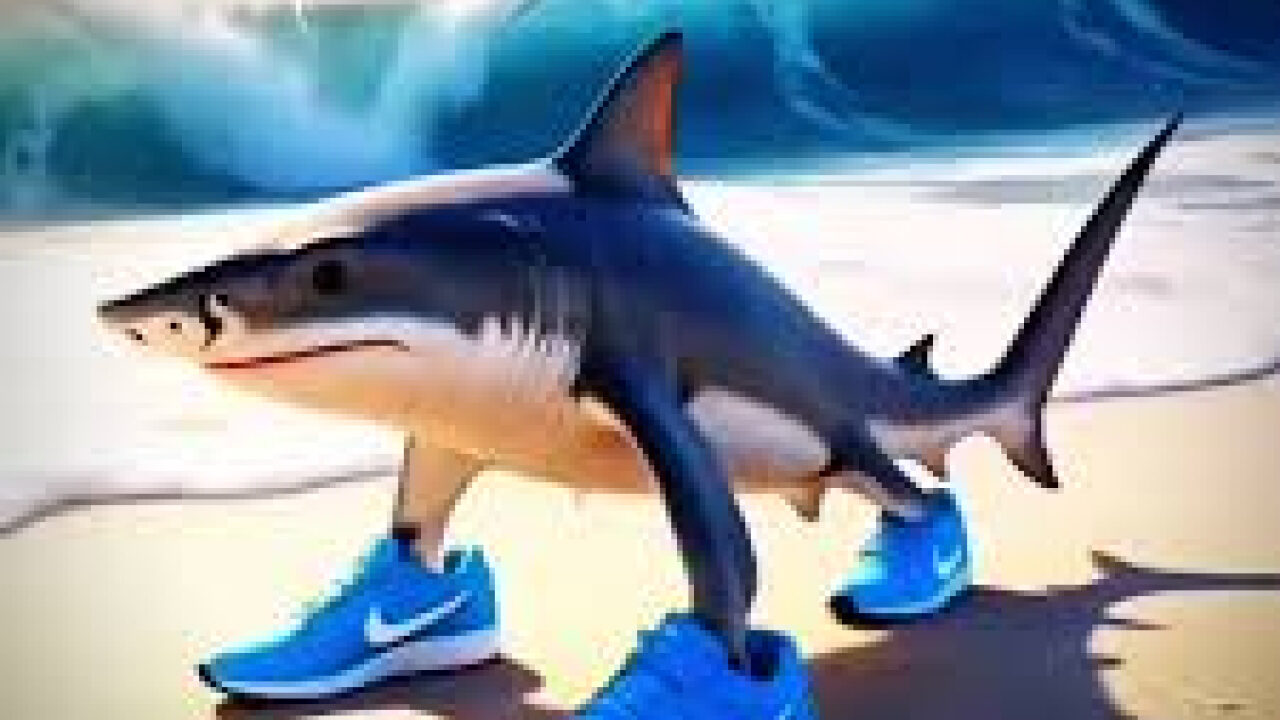
You know that feeling when a song gets stuck in your head and it’s basically just gibberish, but somehow it’s the only thing you want to hear? That’s the "tralalero tralala" shark meme in a nutshell. It’s weird. It’s catchy. It’s deeply nonsensical. Honestly, it’s exactly the kind of chaos that the internet thrives on.
But where did this singing predator actually come from?
If you’ve spent any time on TikTok or Instagram Reels lately, you’ve likely seen a poorly rendered or strangely animated shark—sometimes a Great White, sometimes something a bit more cartoonish—bobbing along to a jaunty, high-pitched tune. The lyrics aren’t deep. They aren’t poetic. It’s just "tralalero tralala" on a loop. Yet, this specific audio has managed to rack up millions of views, becoming the go-to soundtrack for everything from "no thoughts, head empty" moments to genuinely bizarre underwater 3D animations.
Why the tralalero tralala shark meme is everywhere right now
Memes usually work because they tap into a specific emotion or a shared experience. This one? It taps into the absolute void. It’s the digital equivalent of a fidget spinner. People use the tralalero tralala shark meme to represent a state of being where you're just vibing, completely unaware of the chaos around you. It's the ultimate "vibe check" for the 2020s.
The audio itself has roots that go back further than the current TikTok trend. While many think it's a brand new creation, the melody actually echoes older folk tunes and nursery rhymes from various European cultures. Specifically, the "tralalero" phrasing is common in Italian and Spanish folk music as a filler lyric. It’s what you sing when you forget the words but want to keep the rhythm going.
Pairing that carefree, almost tauntingly happy sound with a shark—nature’s most feared apex predator—creates a hilarious juxtaposition.
Sharks are supposed to be scary. They are the stars of Jaws. They are the reason people are afraid to go into the ocean at night. But when you see a shark spinning in circles to a "tralala" tune, the fear evaporates. It becomes absurd. This subversion of expectations is the primary engine behind why this meme took off. We like seeing scary things look silly. It makes the world feel a little less heavy, even if it’s just for fifteen seconds.
The weird history of singing sharks
We can't talk about this without mentioning the "Baby Shark" shaped hole in our collective consciousness. Ever since Pinkfong’s "Baby Shark" became the most-viewed video in YouTube history, the internet has had a weird obsession with aquatic life and repetitive melodies.
However, the tralalero tralala shark meme is the "anti-Baby Shark."
Where Baby Shark was polished, corporate, and designed for toddlers, Tralalero is grainy, lo-fi, and deeply ironic. It’s the version of the meme that grew up and realized life is kind of a joke. The animation styles vary, but the most popular iterations often feature "low-poly" models. These are 3D assets that look like they were pulled from a PlayStation 1 game.
This "crap-post" aesthetic is intentional.
In the world of modern internet humor, high production value is often suspicious. If something looks too good, it feels like an ad. But if a shark looks like it was made in five minutes by someone who barely knows how to use Blender, it feels authentic. It feels like it belongs to the "people," not the brands. That’s why you see creators using this audio to show their pets doing something stupid, or to describe their own brains during a difficult exam. It’s relatable because it’s imperfect.
Breaking down the audio origins
Tracing the exact "patient zero" of a meme audio is notoriously difficult because of how sound is recycled on social media. One creator posts it, another "remixes" it, and a third adds a filter.
- The "Tralalero" vocal snippet likely originated from a Mediterranean folk song or a children's choir recording that was sped up and pitch-shifted.
- The "Shark" visual was added by a digital artist, possibly on a platform like Sketchfab or via a stock 3D animation.
- The convergence happened on TikTok, where the "sped up" version of the audio became the definitive track.
Interestingly, many people confuse this with the "Arp" shark or other "dancing shark" memes. But the "tralalero" version is distinct because of its specific vocal cadence. It’s not just music; it’s a performance.
The psychology of "Stuck Song Syndrome"
Why can’t you stop humming it? There’s an actual scientific term for this: involuntary musical imagery (INMI), or more commonly, an "earworm."
Researchers at institutions like Goldsmiths, University of London, have studied why certain songs stick. Typically, earworms are fast-paced, have a generic melodic shape, and contain "unusual intervals" or repetitions that make them stand out. The tralalero tralala shark meme hits all these marks. It’s repetitive enough to be predictable but weird enough to be memorable.
When you hear "tralalero tralala," your brain essentially gets into a loop. Since the song doesn't really have a "resolution"—it doesn't end on a standard musical note or conclude a story—your brain keeps playing it to try and find the finish line.
It never finds it. So you keep humming.
How creators are using the meme today
It’s not just about the shark anymore. Like all great memes, this one has evolved.
You’ll see it in gaming videos, particularly in Sea of Thieves or Subnautica, where players encounter terrifying sea creatures only to edit the "tralalero" audio over the jump-scare. It’s a way to "defang" the monster.
In the lifestyle space, influencers use it to mock their own "cluelessness." Imagine a high-end fashion transition video that suddenly cuts to the creator tripping over a rug while the shark sings. It’s a self-deprecating tool. It signals to the audience: "I know I look ridiculous, and I'm okay with it."
There is also a significant "liminal space" vibe to some versions of this meme. You might see the shark floating through an empty shopping mall or an endless office building (The Backrooms). In these contexts, the meme takes on a surrealist, almost creepy tone. It’s no longer just funny; it’s unsettling. This versatility is exactly why the meme has survived longer than the typical one-week lifecycle of a TikTok trend. It can be funny, cute, creepy, or just plain dumb depending on the background.
The "Dead Internet Theory" and Meme Bots
There’s a darker side to the rise of the tralalero tralala shark meme that’s worth mentioning. Because the meme is so simple and requires very little context, it is frequently used by bot accounts to farm engagement.
If you see a Facebook page posting the same shark animation every three hours, you’re likely looking at an automated system. These bots use high-performing audio tracks like "Tralalero" to trick the algorithm into thinking the content is "trending." This is a fascinating look at how memes are no longer just human-to-human communication; they are pieces of code designed to trigger other pieces of code.
But for the average user, none of that matters. They just like the singing fish.
What we get wrong about meme culture
People often dismiss memes like this as "brain rot." They see a singing shark and think the younger generation has lost its mind. But if you look back at history, we’ve always done this.
In the 1920s, people had nonsensical slang and silly songs that made no sense to their parents. In the 1970s, we had the "Pet Rock." The tralalero tralala shark meme is just the digital version of a Pet Rock. It’s a shared piece of nothingness that brings people together.
It’s also an entry point for 3D artists. Many young animators use these memes as "practice." Creating a shark that moves in time with a "tralalero" beat is a great way to learn about keyframes, rigging, and lighting. What looks like a "shitpost" to a boomer is actually a portfolio piece for a 19-year-old artist in Indonesia or Brazil.
The future of the singing shark
Will we still be talking about the tralalero tralala shark meme in six months? Probably not. That’s the nature of the beast. But the impact of its style will remain. We are seeing a massive shift toward "Absurdist Realism" in online content.
We’re tired of the "perfect" Instagram aesthetic. We don't want to see another perfectly lit avocado toast. We want to see a shark that looks like a potato singing a song that sounds like a fever dream.
The next time you find yourself humming those three little words—tralalero tralala—don't fight it. Embrace the absurdity. In a world that often feels like it's taking itself way too seriously, a singing shark is a reminder that it's okay to just exist, spin in circles, and sing a song that means absolutely nothing.
Actionable Insights for Content Creators
If you're looking to leverage the tralalero tralala shark meme or similar trends, here is how to do it without looking like a "fellow kids" corporate disaster:
- Lean into the Lo-Fi: Do not try to make the animation look good. The worse it looks, the more "meme-accurate" it feels. Use filters that add grain or reduce the frame rate.
- Juxtaposition is Key: Use the audio when something "serious" or "scary" is happening. The humor comes from the contrast between the happy song and the actual situation.
- Keep it Short: The sweet spot for this audio is 7 to 11 seconds. Any longer and the "earworm" effect becomes annoying rather than catchy.
- Don't Explain It: The first rule of meme club is that you don't explain the meme in the caption. Let the audience feel like they are "in" on the joke.
- Check the Source: Before using any audio, click the sound link on TikTok to see the most recent videos. Memes can flip from "funny" to "problematic" or "overused" in 48 hours. If you see too many "verified" accounts using it, the trend is likely on its way out.
Focus on the "no thoughts, head empty" energy. That is the core of this meme's success. Whether you are a brand or an individual, the goal isn't to be "right"—it's to be relatable in the most ridiculous way possible.