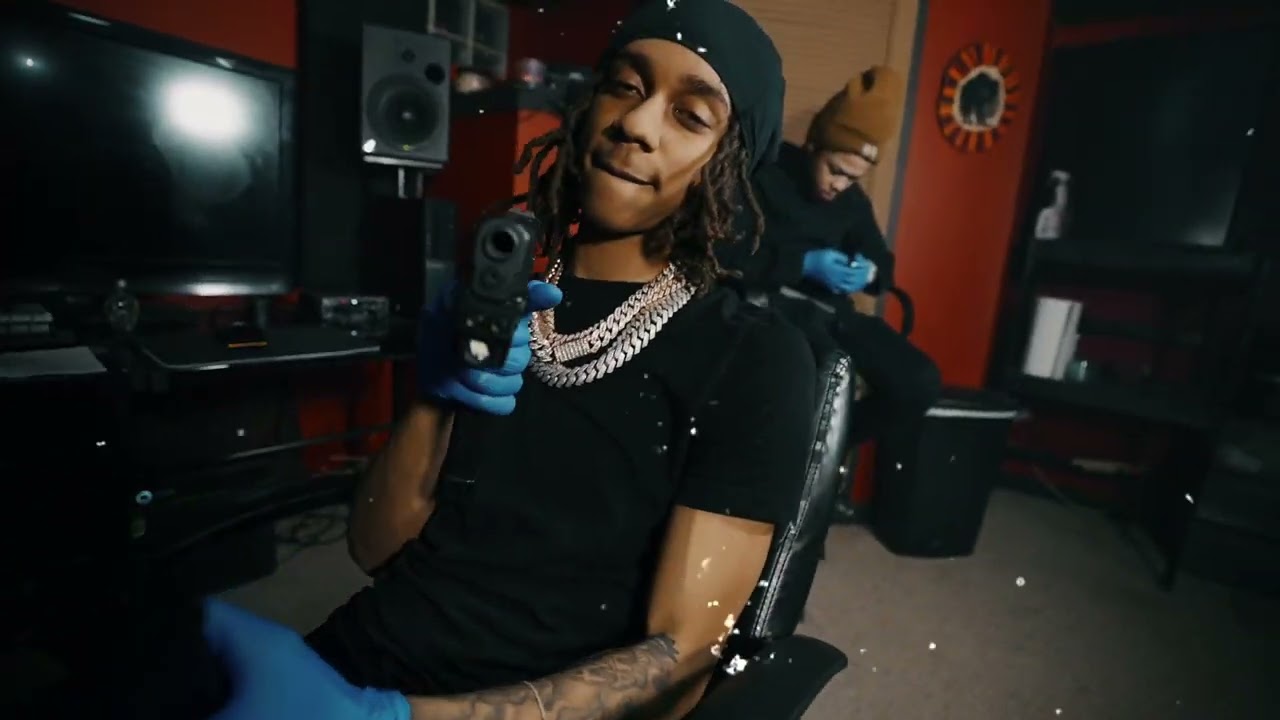
The streets of Chicago don’t usually give out second chances. It’s a harsh reality that the hip-hop world had to face yet again when news started circulating about a young, polarizing figure from the city's drill scene. People kept asking the same thing over and over: did Bloodhound Lil Jeff died? Honestly, the answer came fast and it was grim. On June 8, 2024, the rapper, whose real name was Jeffrey Morgan, was shot and killed in a brazen daytime incident that left the internet—and the South Side—in a state of absolute shock. He was only 21.
It wasn’t just another headline.
Jeff was a lightning rod for controversy. Some saw him as a rising star with a raw, unfiltered sound that captured the desperation and aggression of his environment. Others saw him as a symbol of the cycle of violence that plagues certain Chicago neighborhoods. He leaned heavily into his "Bloodhound" persona, often referencing street conflicts in his music and on social media with a level of boldness that felt almost suicidal to those watching from the outside. When the news broke that he had been gunned down, it felt like a tragic, albeit predictable, end to a story that was moving at a thousand miles per hour.
The Afternoon That Changed Everything
The details of the shooting are chilling because of how public it was. It happened around 3:30 PM in the 6600 block of South Rhodes Avenue. That’s a residential area. People were out. Kids were around. Reports from the Chicago Police Department and local news outlets like ABC7 Chicago confirmed that Morgan was struck multiple times. He was rushed to the University of Chicago Medical Center, but he didn't make it. He was pronounced dead shortly after arrival.
You’ve probably seen the footage.
In the digital age, nothing stays hidden for long. Surveillance video surfaced showing a group of individuals running toward a house, followed by a flurry of gunfire. It looked like a scene out of a movie, but the stakes were real. The "Bloodhound" crew was right in the middle of it. The chaos of that afternoon wasn't just a random act; it was a targeted, violent confrontation that snuffed out a life just as it was beginning to gain national traction.
Why the Question "Did Bloodhound Lil Jeff Died" Blew Up
The internet is a weird place. Sometimes, when a rapper is reported dead, people assume it's a hoax to drum up album sales. We've seen it before. But with Jeff, the evidence was overwhelming and immediate. The reason the search for did Bloodhound Lil Jeff died spiked so hard was partly due to his massive, almost cult-like following on Instagram and TikTok.
He lived his life in the open.
He was constantly "live," showing off jewelry, stacks of cash, and making threats against rivals. This wasn't "studio gangster" posturing; it felt visceral. When he stopped posting, the vacuum was filled with rumors. His fans were desperate for a "he's actually in the hospital" or "it was all for a music video" narrative. But the Cook County Medical Examiner’s office doesn't lie. They confirmed the identity, and the drill community went into mourning—or, in the case of his rivals, into celebration. That’s the ugly side of this subgenre. The "diss" tracks started appearing almost before the body was cold.
A Career Cut Short or a Path Already Written?
Jeff wasn't a veteran. He was a spark. His music, characterized by tracks like "Triple Knot" and "Stop Playin," was high-energy, dark, and hyper-local. He represented a specific faction, and his lyrics were often used as evidence by "internet detectives" trying to link him to various unsolved crimes in the city. This is where things get complicated.
The "Bloodhound" moniker wasn't just a cool rap name. It was an identity.
Critics of the genre argue that rappers like Jeff glorify the very violence that eventually claims them. They aren't entirely wrong. But if you talk to the kids who lived in the same blocks as him, they see it differently. To them, he was a guy who found a way out—or at least a way up. He was making money. He was becoming a "somebody." The tragedy lies in the fact that he couldn't leave the "nobody" beefs behind. You can't be a global superstar and a local enforcer at the same time. The math just doesn't work.
The Investigation and the Aftermath
So, where does the case stand now? As of late 2025, the investigation into Jeffrey Morgan’s death has been a tangled web of street silence and digital breadcrumbs. Police have struggled with the "no snitching" culture that defines these neighborhoods, yet the sheer amount of video evidence from that day has given them leads that most cases lack.
There were reports of a "self-defense" claim by some parties involved, suggesting that Jeff and his associates might have been the initial aggressors in the incident that led to his death. It’s a messy legal and moral gray area. If you go looking for trouble and find it, is the person who pulls the trigger a murderer or someone defending their home? These are the questions Chicago courts have to sift through while the families are left to bury their sons.
The impact on the Chicago scene has been massive. Jeff’s death triggered a wave of retaliatory threats. The CPD had to increase patrols in the Woodlawn and Greater Grand Crossing areas for weeks following the shooting. It wasn't just about one man dying; it was about the potential for a full-scale war.
Key Facts About the Incident:
- Date: June 8, 2024
- Location: 6600 block of South Rhodes Ave, Chicago
- Hospital: University of Chicago Medical Center
- Age at Death: 21 years old
- Legal Status: The investigation remains open, with various theories regarding the shooters' identities circulating online.
The Cultural Weight of Bloodhound Lil Jeff
We have to talk about the "Chiraq" phenomenon. It’s a term people use to describe the war-zone conditions of certain Chicago pockets, and Jeff was the poster child for the 2024 era of this movement. Unlike the 2012 era of Chief Keef and Lil Reese, this new wave is even more digitally connected. Everything is on camera. Every "drill" (an attack) is bragged about on Instagram Stories.
This creates a feedback loop.
The more famous you get, the bigger the target on your back becomes. For Jeff, the "Bloodhound" brand was built on being untouchable. When he was killed, that myth was shattered. It’s a cautionary tale that keeps repeating itself, from Young Pappy to King Von, and now to Lil Jeff.
Some fans have tried to keep his legacy alive by releasing unreleased snippets and "type beats" in his style. You’ll find countless YouTube tributes with millions of views. It shows the reach he had in such a short time. He had a flow that was frantic, almost breathless, like he knew he was running out of time. Listening to his verses now, it’s hard not to hear a sense of impending doom. He wasn't rapping about a long life; he was rapping about the life he had right then.
Addressing the Misconceptions
One thing that drives me crazy is the misinformation. After the shooting, some blogs claimed he was killed over a chain. Others said it was an internal dispute within the Bloodhound set. Based on the most reliable reporting from journalists who cover the beat, like those at the Chicago Sun-Times, it appears to have been a targeted hit stemming from long-standing neighborhood feuds. It wasn't about jewelry. It was about "respect" and "territory"—concepts that seem trivial to outsiders but are worth dying for in that environment.
Another rumor was that he survived and was in witness protection. Let's be real: that doesn't happen for drill rappers in the middle of active gang wars. The paperwork from the medical examiner is public. The funeral was held. The grief of his mother and friends was visible. He is gone.
What This Means for the Future of Drill
Can the genre survive this much loss? Every time a major artist like Lil Jeff falls, people predict the end of drill music. But it doesn't end. It just gets darker. The younger kids who looked up to him are now picking up microphones—and guns—to take his place. It’s a cycle that music labels and streaming platforms are increasingly being criticized for. Are they profiting off the death of these young men?
When you stream a Bloodhound Lil Jeff song, you’re listening to the literal soundtrack of a person's demise. It’s heavy. It’s nuanced. It’s not just "entertainment."
Actionable Insights and Next Steps
If you’re someone who follows the Chicago scene or is just trying to make sense of the violence, there are ways to engage that don't involve feeding into the negativity.
- Verify your sources. Don’t trust every "news" page on Instagram. Follow local Chicago journalists who actually go to the scene and talk to the police.
- Support community initiatives. Organizations like Project Hood or Chicago CRED work specifically to provide alternatives to the lifestyle that claimed Jeff’s life. They focus on job training and conflict de-escalation.
- Listen critically. Understand the context of the music. It’s a reflection of an environment. While the energy is infectious, the reality is often fatal.
- Monitor the legal updates. Keep an eye on official CPD press releases if you want to know if anyone is actually charged in the Morgan case. Real justice happens in courtrooms, not on Twitter threads.
The story of Bloodhound Lil Jeff is a tragedy of potential wasted. He had the talent to be on the charts next to Lil Durk or G Herbo. Instead, he’s a statistic in a city that has seen too many of them. The question wasn't just did Bloodhound Lil Jeff died, but rather, why does this keep happening?
To stay informed on the actual legal developments of this case, you should regularly check the Chicago Police Department’s "Clear Map" or the Cook County Clerk’s website for any new filings related to the suspects. Avoid the "tribute" channels that use his death for clickbait and focus on the primary documents. This is the only way to separate the myth from the man.