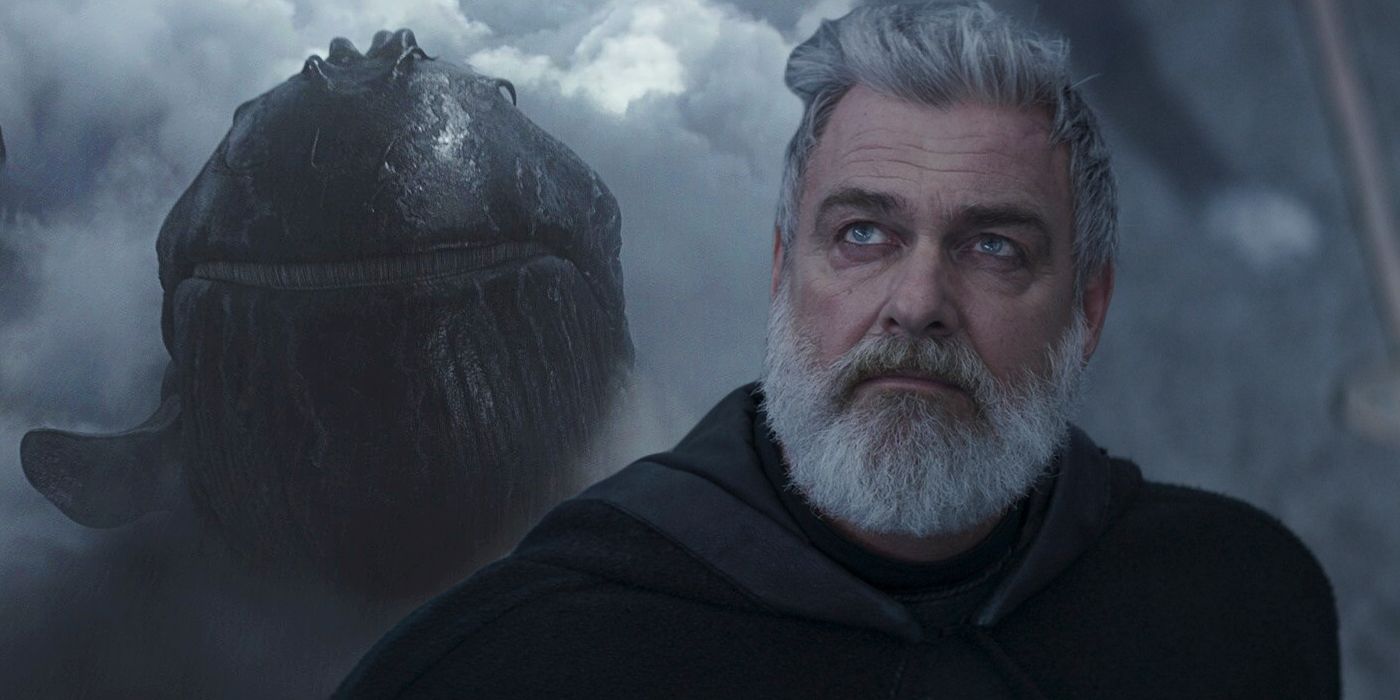
Space is big. Really big. But in Star Wars, the empty spots between the stars—what fans and creators often call the Void—actually matter way more than the shiny planets everyone fights over. Honestly, if you just watch the movies, you might think the galaxy is a crowded neighborhood where you can hop from Tatooine to Coruscant in a weekend. It's not.
The Void is basically the graveyard of the galaxy. It’s the terrifying, lightless expanse where the laws of physics start to feel like mere suggestions. We’re talking about the "Wild Space" beyond the Outer Rim and the "Unknown Regions" that make up nearly half the galactic map. Most people think it's just empty air. They're wrong. It’s a physical barrier that has shaped the entire history of the Jedi, the Sith, and the Empire.
The Physics of Nowhere
When we talk about the Void in Star Wars, we aren't just talking about a lack of stuff. We’re talking about the Rishi Maze, the intergalactic voids between satellite galaxies, and those massive, uncharted pockets of space where hyperdrive navigation fails completely. Navigation in Star Wars isn't like using Google Maps. It’s more like sailing a wooden ship through a hurricane while blindfolded.
Hyperspace isn't another dimension that exists totally separate from reality; it’s tethered to it. Massive objects in realspace cast "mass shadows" in hyperspace. In the deep Void, there are no stars to guide you, but there are rogue planets, black holes, and "gravity wells" that can yank a ship out of lightspeed and shred it to pieces before the pilot even realizes they've hit something.
Think about the Katana fleet. That’s a classic example from the old Expanded Universe (now Legends, but the logic still holds in canon). Two hundred Dreadnaught-class heavy cruisers just... vanished. They hit a patch of nothing and were swallowed by the scale of the galaxy. That is the true power of the Void. It doesn't kill you with lasers; it kills you with distance.
Why the Unknown Regions Are Actually Terrifying
The Unknown Regions are the biggest chunk of the Void that actually impacts the plot. This isn't just "unmapped" territory. It's a chaotic labyrinth of solar storms, rogue magnetospheres, and gravity anomalies. Grand Admiral Thrawn is famous basically because he's the only guy who figured out how to steer a boat through that mess.
Chuck Wendig’s Aftermath trilogy gives us a pretty chilling look at how the Empire viewed this space. Palpatine was obsessed with it. He sensed a "presence" out there. Not a person, necessarily, but a dark side signal calling from the emptiness. He spent decades sending scout ships into the Void. Most never came back. The ones that did brought back data that eventually allowed the First Order to hide and build Starkiller Base. Without the protection of that impassable emptiness, the New Republic would have found them in a week.
The Force in the Empty Places
Is the Force in the Void? That’s a question that keeps lore nerds up at night.
Most Jedi believe the Force is generated by life—"it surrounds us and penetrates us." So, logically, if you go into the deep Void between galaxies where there are no planets, no plants, and no people, the Force should get weaker, right?
Not exactly.
The Void is where we see the "World Between Worlds" vibes or the strange, ethereal nature of the Force start to take over. In the Thrawn Ascendancy novels by Timothy Zahn, we learn about "Sky-walkers." These are Force-sensitive Chiss children who use the Force to navigate the "Chaos" (their name for the Void). They don't use computers. They use instinct. They feel the ripples in the emptiness.
- The Void isn't empty of the Force; it's empty of distractions.
- Without the "noise" of billions of living beings on a planet like Coruscant, the Force becomes raw.
- It's cold.
When Luke Skywalker went into exile on Ahch-To, he wasn't just hiding; he was looking for a place where the galaxy’s noise faded out. While Ahch-To has life, it sits on the edge of the known. The deeper you go into the Void, the more the Force feels less like a friend and more like a fundamental, uncaring power of the universe.
The Great Disaster and the High Republic
If you want to see what happens when the Void fights back, look at the High Republic era. The "Great Disaster" happened because a ship called the Legacy Run collided with an obstacle while in a hyperspace lane. This resulted in "Emergences"—pieces of the ship exiting hyperspace at near-lightspeed all over the galaxy, acting like nuclear bombs.
This event proved that the "lanes" we take for granted are just thin threads of safety stretched across a literal ocean of death. The Nihil, the villains of that era, used "Path engines" to jump through the Void in ways nobody thought possible. They didn't use the established highways. They drove off-road through the dark. That's why they were so scary. They turned the emptiness into a weapon.
Why the Void is the Future of Star Wars
Honestly, the franchise is running out of room in the "Known Galaxy." We've seen Tatooine enough times. We get it. It’s sandy.
The real meat of the story is moving toward the edges. Ahsoka literally took us to another galaxy. To get there, they had to cross the "Intergalactic Void." They used the migration paths of Purrgil (the space whales). This is a huge shift in how we think about the Star Wars map.
The Void is no longer just a border. It’s a bridge.
But it’s a bridge that requires something more than just a fast ship. It requires a connection to the ancient, biological side of the universe. You can't math your way across the Void. You have to feel your way across.
Common Misconceptions About Deep Space
- It's instant travel: People see a jump to hyperspace and think it's like a loading screen in a video game. It's not. Crossing the Void can take weeks or months. Ships are tiny ecosystems. If your life support fails in the Void, you aren't just dead; you're forgotten.
- The Sith own the dark places: Actually, the Sith were often just as scared of the Unknown Regions as the Jedi. The Sith Empire spent centuries hiding in the Void, but they weren't masters of it. They were huddling in the dark, hoping the bigger monsters didn't see them.
- Nothing lives there: Between the Purrgil, the Nephil, and whatever entities exist in the "Otherspace" (a dimension sometimes linked to the Void in older lore), the emptiness is surprisingly crowded with things that don't need oxygen or sunlight.
Navigating the Nothing
How do you actually survive out there? If you’re writing a TTRPG campaign or just trying to understand the lore, you have to look at the tech. Navicomputers are the unsung heroes of the franchise. They calculate the "brails" and "vectors" needed to avoid the gravity wells mentioned earlier.
In the Void, these computers often fail because they have no reference points. No "pulsars" to sync with. This is where "Dead Reckoning" comes in. Pilots have to manually adjust for the drift of the galaxy itself. It's incredibly dangerous. One degree of error at the start of a jump can put you ten thousand light-years off course by the end.
What This Means for Your Understanding of the Lore
The Void isn't a "nothing" placeholder. It's the primary antagonist of the setting. It's what keeps the Republic from being a true utopia—they simply can't reach everyone. It's what allowed the Sith to survive for a thousand years. It’s the reason why "scouts" like the ones in the Explorer’s Guide materials are the most respected people in the outer systems.
When you see a map of the Star Wars galaxy, don't look at the dots. Look at the black space between them. That's where the real mystery lives. That's where the next 40 years of stories are going to happen.
Actionable Insights for Star Wars Enthusiasts:
- Study the "Perlemian Trade Route": To understand the Void, you have to understand the "roads" that avoid it. Look at how the major trade routes wrap around the galactic center to see where the "holes" in the map are.
- Read "Chaos Rising" by Timothy Zahn: This is the best modern resource for understanding how navigation works in unmapped space. It moves away from the "magic" of the Force and into the "tactical" reality of the Void.
- Track the Purrgil migrations: In Rebels and Ahsoka, pay attention to the star maps shown. The migration routes are the only "natural" paths through the intergalactic void, and they follow specific ley lines of Force energy.
- Differentiate between Wild Space and the Unknown Regions: Wild Space is the fringe of the known (mapped but not settled), whereas the Unknown Regions are "geographically" blocked by the Void's anomalies. Knowing the difference helps clarify why the Empire could find one but not the other.
The galaxy is shrinking as technology improves, but the Void in Star Wars remains the final frontier. It’s the one thing that even a Death Star can't blow up. It's the silence that eventually swallows every empire, every rebel, and every star.
By focusing on the "nothing," you actually see the "everything" of how this universe functions. Stop looking at the lightsabers for a second and look at the dark. That's where the truth is.