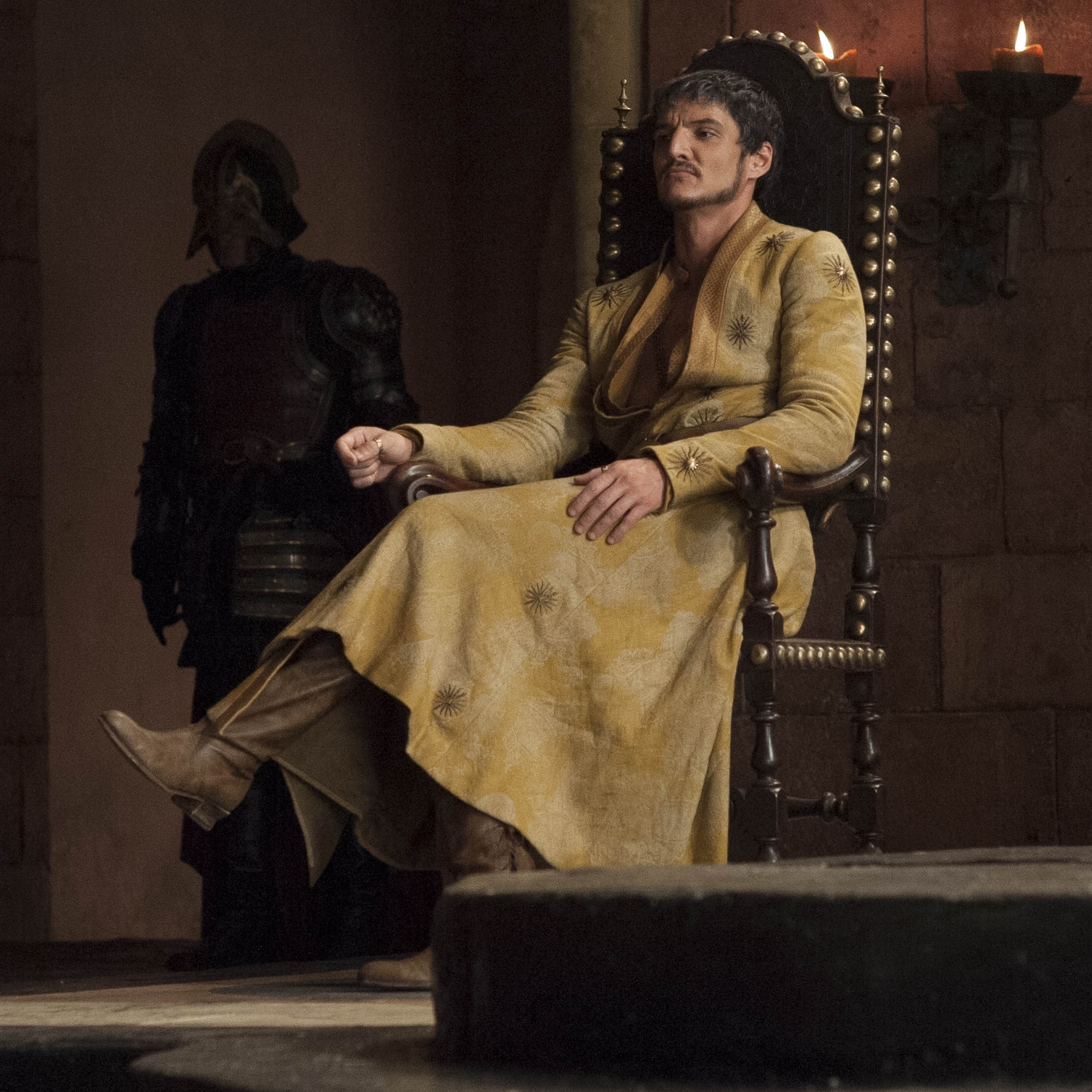
He entered the frame with a prostitute on each arm and a chip on his shoulder the size of Casterly Rock. Most characters in the HBO adaptation of George R.R. Martin’s world take seasons to find their footing. Not Prince Oberyn Martell. In just seven episodes, Pedro Pascal’s Oberyn Game of Thrones portrayal didn't just chew the scenery—it set the whole kitchen on fire. He was the breath of fresh air a stagnant King’s Landing desperately needed. But then, as we all know, things went south in the most literal, skull-crushing way possible.
The Red Viper was never just a warrior. He was a political hand grenade.
The Politics of a Sunspear Prince
When we first meet Oberyn in Season 4, the war of the five kings is basically winding down, yet the tension is higher than ever. Why? Because the Martells don't forget. They don't forgive, either. For nearly two decades, the Dornish sat in their desert fortresses, seething over the brutal murder of Elia Martell during Robert’s Rebellion. Oberyn wasn't at the capital to celebrate a royal wedding. He was there for a head. Specifically, Gregor Clegane’s head, though Tywin Lannister’s would have been a nice bonus.
Honestly, the show handles this better than most people realize. In the books, A Storm of Swords, Oberyn is a bit more of a wildcard, but Pascal brings a localized, simmering rage that feels terrifyingly personal. He’s the only person in the room who isn't afraid of Tywin. Think about that. Even Cersei and Tyrion flinch when the Old Lion roars. Oberyn just pours another glass of wine and asks when he gets to start killing people. It’s a level of "don't give a damn" that remains unmatched in the series.
Dorne is different. It’s the only part of the Seven Kingdoms that wasn't conquered by Aegon the Conqueror and his dragons. They joined through marriage. That historical independence baked into Oberyn’s DNA explains his total lack of deference to the Iron Throne. He views the Lannisters as upstarts. Cruel, golden-haired upstarts who owe a debt in blood.
Why the Trial by Combat Was Never About Tyrion
We like to think of Oberyn as Tyrion’s savior. It’s a nice narrative. The outcast prince helping the outcast dwarf. But let's be real: Tyrion was a tool. A convenient excuse.
When Oberyn visits Tyrion in the dungeons—that iconic scene lit by a single flickering torch—he tells the story of seeing Tyrion as a baby. It’s a heartbreaking moment. He exposes the Lannisters' cruelty from the very beginning. But when he says, "I will be your champion," he isn't doing it out of the goodness of his heart. He’s doing it because the Mountain is the Lannisters' prized pet. To kill the Mountain in a formal trial is to humiliate Tywin Lannister in front of the entire city.
It was the perfect trap. Or it should have been.
Oberyn’s fighting style was a revelation. While the Westerosi knights were clanking around in heavy plate mail, swinging giant slabs of iron, Oberyn was dancing. He used a spear. He used reach. He used poison—specifically, "manticore venom" thickened with magic to ensure a slow, agonizing death. He had already won the fight before he stepped into the pit; he just needed the Mountain to say the names.
Elia Martell. You raped her. You killed her. You killed her children.
He repeated it like a mantra. It wasn't just a battle cry; it was a legal deposition delivered at the point of a spear. He needed a confession to link the crime back to Tywin. That was his mistake. He wanted justice in a world that only trades in power.
The "Oberyn Effect" on Pop Culture
People still talk about that "crunch." You know the one.
The death of Oberyn Game of Thrones changed how we watched the show. Up until that point, we thought we were safe. We’d survived the Red Wedding. We thought the "good guys" (or at least the cool ones) were due for a win. When the Mountain grabbed Oberyn’s legs, the collective gasp from the audience was deafening. It wasn't just a character dying; it was the death of hope for a clean resolution to the Elia Martell tragedy.
It also launched Pedro Pascal into the stratosphere. Before this, he was a working actor with some good credits. After? He became the internet’s "Cool Dad" and the lead in The Mandalorian and The Last of Us. The charisma he channeled into Oberyn—that fluid sexuality, the sharp wit, the underlying grief—it became the blueprint for the modern TV anti-hero.
But let's look at the ripples within the story. Without Oberyn’s death:
- Tyrion doesn't flee to Essos.
- Tywin doesn't die on a toilet.
- The Sand Snakes don't start a coup in Dorne (for better or worse, mostly worse according to fans).
- Cersei doesn't lose her mind quite as quickly.
Oberyn was the domino that knocked over the entire Lannister dynasty. He failed to kill Tywin with his spear, but his death ensured Tywin’s demise within the hour.
The Poison He Left Behind
There is a technical detail often missed by casual viewers. Oberyn didn't just coat his spear in any old poison. He used a specially treated venom that kept the Mountain alive in total agony. This led to the creation of Robert Strong—the silent, undead version of Gregor Clegane.
In a way, Oberyn’s vengeance was total. He turned the Lannisters' greatest weapon into a rotting, mindless corpse that eventually played a role in the total destruction of the Red Keep. Even in defeat, the Red Viper left a sting that lasted until the final episode.
How to Re-watch the Dornish Arc
If you’re going back to watch Season 4, don't just focus on the fight. Look at the way Oberyn interacts with the Small Council. He’s the only one pointing out the hypocrisy of the crown. He challenges the "morality" of King’s Landing at every turn.
Key things to watch for:
- The subtle nod between Oberyn and Tywin during the wedding.
- The way Oberyn looks at the Iron Throne—with total disgust.
- His insistence on including his paramour, Ellaria Sand, in every royal function, flipping the bird to Westerosi "decency."
The tragedy of the character isn't that he died. It’s that he was right. He knew the Lannisters were monsters. He knew the system was broken. He just thought he was fast enough to stay outside its gears. He wasn't.
If you want to dive deeper into the lore, look into the "Prince of Fools" history in the Fire & Blood books. It provides a massive amount of context for why the Martells behave the way they do. They are the survivors. They are the ones who wait. Oberyn was the exception—the one who couldn't wait any longer.
To truly appreciate the impact of this character, you have to look at the vacuum he left. The show struggled with the Dorne storyline for years after he departed because no one could match that energy. He was a once-in-a-generation character that reminded us why we fell in love with this brutal, unfair world in the first place. Don't just mourn the ending; appreciate the seven episodes of absolute perfection he gave us.