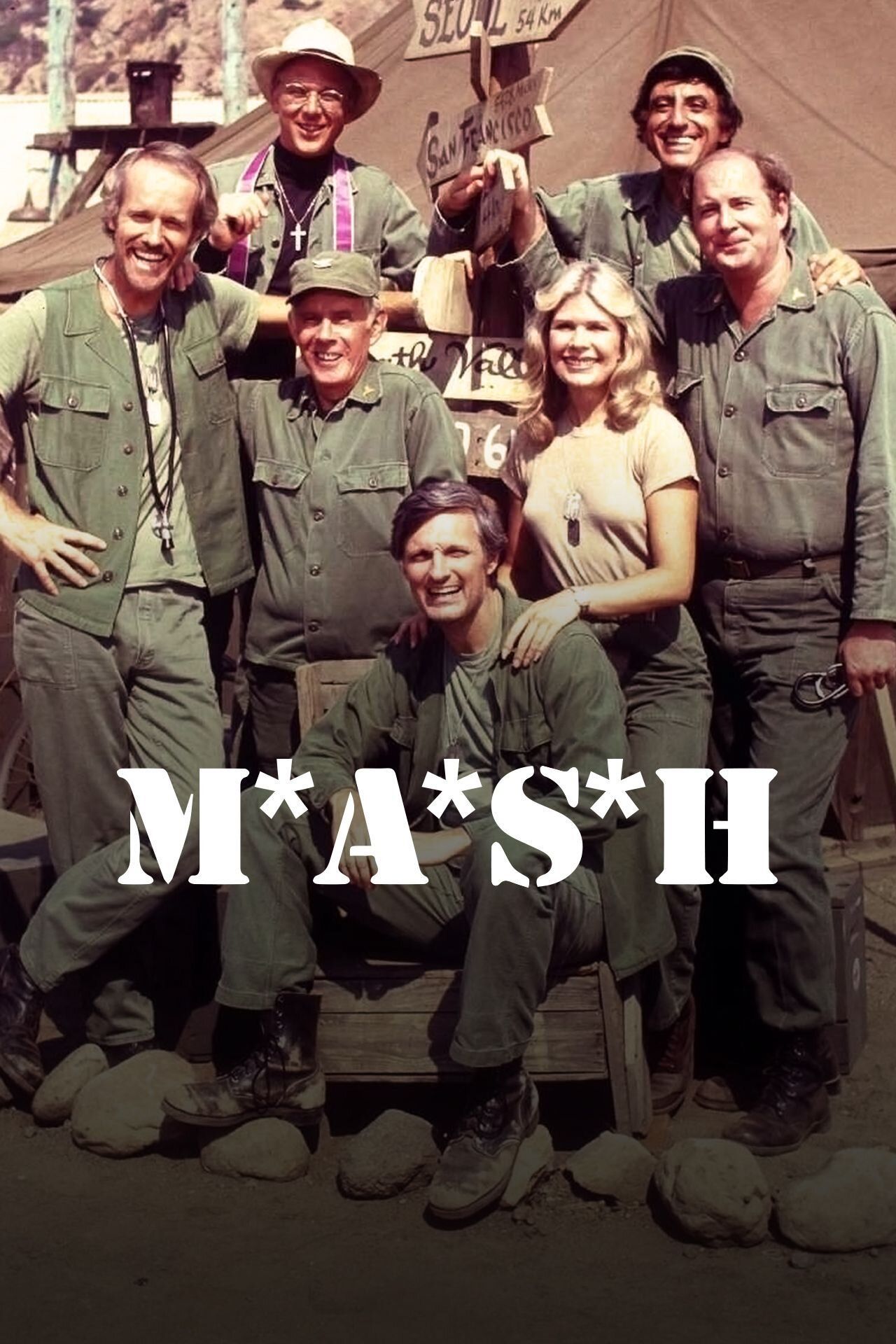
It’s actually hard to wrap your head around the numbers. February 28, 1983. A Monday night. Somewhere around 106 million people—maybe even 121 million depending on which Nielsen metric you trust—sat down and stayed put. They weren't just watching a sitcom end. They were watching a piece of the American psyche get packed into a crate and shipped home. The MASH TV show final episode, titled "Goodbye, Farewell and Amen," didn't just break ratings records. It fundamentally broke the way we think about television finales.
Television wasn't supposed to be this heavy. Back then, you had Cheers or The Love Boat. Sure, MASH* had been a "dramedy" for a decade, but the finale was something else entirely. It was a feature-length film, clocking in at two and a half hours, directed by Alan Alda himself. It felt like a marathon.
The Mental Toll Nobody Wanted to Talk About
If you ask someone what they remember about the MASH TV show final episode, they usually bring up the chicken. Or, rather, the "chicken." It’s arguably the most traumatic scene in the history of network television. Hawkeye Pierce, the fast-talking, martini-swilling surgeon who had been the show’s moral compass, is in a mental institution. He’s repressed a memory so dark it literally broke his brain.
He remembers being on a bus. They’re hiding from a North Korean patrol. There’s a woman with a chirping chicken. He tells her to keep it quiet. She smothers it.
And then the reveal hits. It wasn't a chicken. It was her baby.
👉 See also: Temuera Morrison as Boba Fett: Why Fans Are Still Divided Over the Daimyo of Tatooine
Honestly, it’s a miracle CBS let that air in 1983. That kind of narrative audacity is what separated MASH* from every other show of its era. It wasn't just about the laughs anymore. It was about the horrific, lingering cost of war. Hawkeye’s breakdown wasn't just a plot point; it was an acknowledgment that no one—not even the "hero"—comes home whole. Dr. Sidney Freedman, played by the brilliant Allan Arbus, has to guide him back to reality, but it’s a fragile reality at best.
Why the Ratings Will Probably Never Be Beaten
We live in a fragmented world now. You've got Netflix, Disney+, YouTube, and a million other distractions. Back in '83, you had three big networks and a local station if you were lucky. The MASH TV show final episode grabbed a 60.2 rating. Think about that. Over 60% of all households with a TV were tuned to the same channel.
It was a communal event. New York City reportedly saw a massive spike in water usage immediately after the episode ended because everyone waited until the credits rolled to use the bathroom. The city’s infrastructure literally groaned under the weight of a commercial break.
The Plot Points That Actually Mattered
The episode wasn't all just Hawkeye in a psych ward. There was a war to finish. The ceasefire was finally, mercifully, being signed. But even as the end approached, the show refused to give everyone a "happily ever after."
✨ Don't miss: Why Tinker Tailor Soldier Spy Actors Still Define the Modern Spy Thriller
- B.J. Hunnicutt never got to say a proper goodbye to Hawkeye face-to-face. He was sent home, then sent back, then finally left a message in stone.
- Father Mulcahy loses his hearing due to a mortar shell. The man who lived to listen to others' sins and sorrows is suddenly trapped in silence. It's cruel irony, yet he finds a way to serve the deaf community.
- Margaret Houlihan chooses a career in a stateside hospital, finally shedding the "Hot Lips" persona for good and becoming a respected officer.
- Maxwell Klinger, the man who spent years trying to get a Section 8 discharge to go home to Toledo, stays in Korea. He falls in love with Soon-Lee and decides to help her find her family.
It’s messy. It’s "kinda" perfect because life is messy.
The Goodbye Seen 'Round the World
The final scene is burned into the collective memory of anyone over the age of fifty. Hawkeye is taking off in a chopper. He looks down at the pad where he’s spent the last eleven years of his life. B.J. has used white stones to spell out a massive "GOODBYE" on the helipad.
It’s simple. It’s effective. It’s devastating.
That single shot captures the essence of the MASH TV show final episode. It wasn't just the characters saying goodbye to each other; it was the actors saying goodbye to the audience. They had filmed in the hills of Malibu (standing in for Uijeongbu) for over a decade. The set actually burned down during the filming of the finale—an actual brush fire that they decided to write into the script. Talk about a sign from the universe.
🔗 Read more: The Entire History of You: What Most People Get Wrong About the Grain
What Most People Get Wrong About the Timeline
There’s a common misconception that MASH* the show lasted about as long as the Korean War. Not even close. The real Korean War lasted three years (1950–1953). The TV show lasted eleven. This means the 4077th saw more "New Year's Eve" episodes than the actual war had years.
The finale had to bridge that gap. It had to make the audience feel the exhaustion of a three-year stint that had somehow taken eleven years to tell. By the time "Goodbye, Farewell and Amen" aired, the cast looked significantly older than they did in 1972. Alan Alda’s hair was greying. Jamie Farr had stopped wearing the dresses. The show had evolved from a frat-house-in-a-war-zone comedy into a somber, philosophical meditation on human endurance.
How to Revisit the Finale Today
If you're looking to rewatch the MASH TV show final episode, don't just find a "best of" clip on YouTube. You need the context. You need to see the descent into the ceasefire.
- Watch "As Time Goes By" first. This was the penultimate episode (though filmed last). it deals with the 4077th burying a time capsule. It sets the emotional stakes perfectly.
- Look for the uncut version. Many syndicated versions of the finale are chopped up into five separate 30-minute episodes to fit daily time slots. You lose the pacing. Find the full 150-minute cut on Hulu or DVD.
- Pay attention to the music. The theme song, "Suicide is Painless," is notably absent from the very end. The silence as the chopper flies away is more powerful than any orchestra could ever be.
Honestly, we won't see another television moment like this. Not because shows aren't good anymore, but because the way we consume stories has changed. We don't watch things "together" in the same way. The MASH TV show final episode was the last time the entire country shared a single, tearful conversation. It’s a relic of a different era, but the raw emotion in Hawkeye’s eyes as he realizes what happened on that bus? That’s timeless.
If you really want to understand the impact, look at the archival footage of people watching it in bars and living rooms in 1983. There’s a quietness there. A genuine sense of loss. That’s the power of great writing and a cast that lived their characters. It wasn't just a show ending; it was the end of a family we all felt we belonged to.
Next time you’re scrolling through a thousand options on a streaming service, remember that once upon a time, we all agreed on one thing: saying goodbye to the 4077th was the hardest thing on TV.